

After being in a state of continued peace, further opening of vast vistas and infinite treasures of divine knowledge opens up. The committed seeker and the earnest yogi is forever eager to drink the sweet nectar of spiritual wisdom and in consequence comes closer to blissful God. He/She is perpetually attracted like a magnet to come together with God. So it all begins with calmness and peace at a particular stage. Therefore peace is so essential to attain for a sadhak or rather we can say that it is a prequalification to realize God. So we first attain that divine peace within and after tasting the honey like peace, one will wish to prolong and hold that serene state as long as it is possible. For that reason all the obstructions, irritants and speedbreakers should be removed deliberately and consciously by weeding out those circumstances, events or changing one’s own basic habits. Once this is done, the yogi will stabilize and will be able to retain that stillness and calm mind thereafter.
Visualize a wall of a house that has not been cleaned and painted for very long. And another case in point where the wall is cleaned and painted and is all white in colour. It is spruced up, painted and cleaned at regular intervals by the caretaker. The clean white wall will absorb more sunlight as compared to the other one which does not get cleaned up at recurrent intervals.
A clean mind is a peaceful mind!
Hence a peaceful mind absorbs divinity effortlessly; it reflects light of God easily than putrid, sinful and morally impure heart and mind.
The consciousness of an individual soul comprises of his thoughts, deeds and sanskaras or the basic tendencies. The reflection of divinity in an individual self depends entirely on his type of consciousness. It depends what type of deeds the individual soul has done so far and what he thinks currently. The cleaner the consciousness, the more one imbibes divinity. As pointed out earlier in the previous post that God is love and peace, the cleaner the consciousness, the more one imbibes peace.
There are some aspirants who like to do their spiritual practices and sadhana all by themselves as they think that doing that much is enough for them. They do not go anywhere else but believe that their own efforts are enough for God realization. But many of us do not know that when we visit a holy place and pay our obeisance by going to samadhis or places lived and visited by the illumined masters or Atmagyani, they are still radiating heavenly vibrations and we are able to receive those highly charged spiritual vibrations which act as a catalyst for remarkable transformation in us.
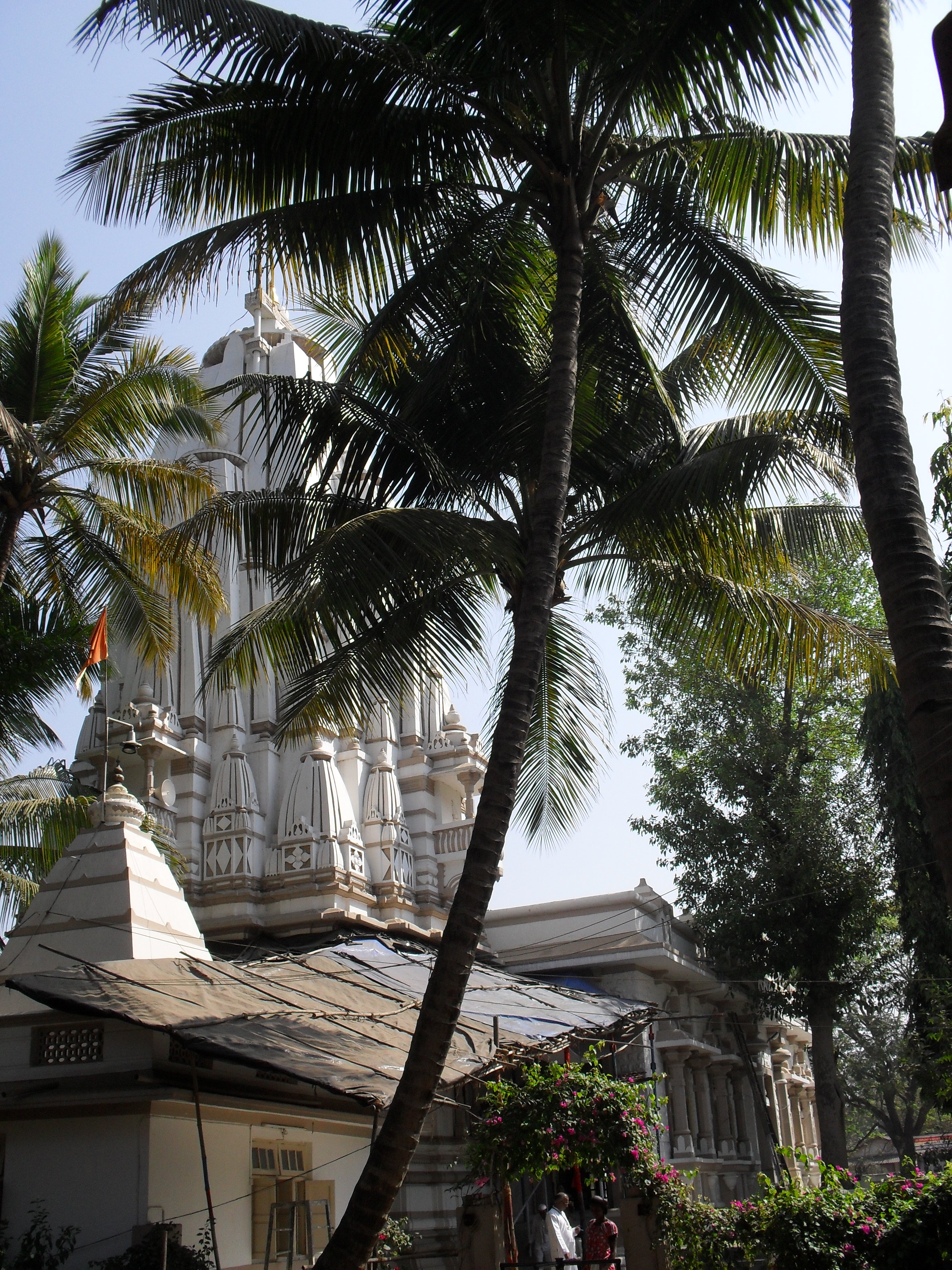
When we visit a ‘live’ or spiritually charged place on earth, the saint or mahayogi even if not residing in his physical body currently, ignites a spark in us which does not allow us to return to obscurity again and secondly they give so much peace to us that we are able to refrain ourselves from doing wrongful deeds again. So this is one of the perfect ways to bring about peace and tranquility and also to hasten the mechanism for self transformation. One must visit holy places with devotion and reverence and humbly ask the holy Spirits residing there to give us peace, stability and tranquility of mind and also help us in our endeavors for transformation regularly. This is one way of acquiring stable peace of mind on our spiritual stepladder and to open new windows of sacred unfoldment on the path of realizing Self.
A reader has asked me the following question the other day:-
“Your previous article was amazing, it had all that a beginner needs to understand and start his/her journey with utmost faith and determination.
There is a shloka in the Bhagwad Gita about yogi: Chapter 2 Verse 69
Yaa Nisha Sarva bhootanaam Tasyam Jagarati Samyamee I
Yasyaam Jagrati Bhootani Saa Nishaa Pashyato Munehe II
That which is night to all beings, in that state, the God realized yogi is awake. Where all beings are awake in the ever changing, transient worldly happiness, that is the night for the seer, one who knows the Self.
If you could write something that explains the deeper meaning behind this and a beautiful example for the explanation is in Verses 70 and 71 about peace.”
Now let me attempt to explain the shloka in my own humble way, hope I do justice to this mighty job.!! Anyway, before I even attempt the explanation, I am already thinking of Krishna and Arjuna in the battle field with his white clothes holding his Gandiva bow and Devdutta conch shell! How fortunate Arjuna was to be taking the divine wisdom directly from none other than Lord Krishna. Oh! What a glorious sight it must have been at that moment!!
Anyhow, let’s now go back to our original thought regarding the shloka. But the initial important question is-
How should one read the holy book Bhagwad Gita?
First and foremost we must invoke the spirit of Lord Krishna and his chief disciple Arjuna, both.
Lord Krishna will impart the eternal knowledge of Self while the all pervading Spirit of Arjuna will teach us how to be an ideal disciple of the Spiritual Master and mentor. And how to balance one’s inner spiritual life with the outer physical and material world consisting of our family, relatives, society, profession and others areas; that is to say that the inner world and the outer world must meet and converge on a positive note. We need to learn to balance both for our happiness, emotional security and sustained peace of mind.
Now we turn to the meaning of the verse-
This verse indeed is very tricky yet interesting because of the analogy of a learned man, the seer with day and the ignorant with night and how contrast they are; yet there is no contradiction in the mind of the seer. The beginners do get baffled by this intriguing example which is also the case of the instance of an inverted Banyan Tree in chapter 15 verse 1. The Banyan Tree is a simile and a comparison of spiritual ignorance of the masses of the world with that of the ancient tree. There is a post on this shloka- Expand your consciousness-I where the verse is explained in the last portion.
Please know that there are two types of men in this world- Those who are aware and awakened in Atman and those who are not, categorized as gyani and agyani- knower and ignorant respectively. Nearly everyone in this world is ignorant in spiritual awareness barring a few handfuls.


Whereas all the other people called the agyani or ignorant live in darkness or night without any wisdom and light doing all sorts of sinful, immoral and senseless activities throughout their lives. These two types of people are contrary in nature like day and night. So while the agyani lives in darkness, the gyani resides in light of God. The gyani never ‘sleeps’ and the agyani is in night because of darkness of ignorance inside him. The ever changing, transitory worldly happiness is night for the yogi while the agyani runs after worldly fleeting happiness. The gyani finds happiness in discovering the revelations of God’s blissful nature and finds it priceless. The agyani on the other hand has no idea that all the other luring, short-term sensual happiness will turn into misery and lingering sorrows. Knowing so, the gyani discards the fleeting, illusory happiness and attains lasting happiness, joy and peace which is permeated in Divine Communion!!
These two types of wise and ignorant are men that are poles apart.
Nevertheless, the gyani does not get perturbed by all this because he knows that wondrous God is arduous to perceive and attain while achieving senseless and incongruous goals are a lot easier to accomplish. The gyani practices yoga, stability of mind, spends his time and breath in unselfish actions called nishkaam karma while the ignorant spends his whole life indulging in and running after insubstantial and earthly things because of greed and desire and also seeks corporeal pleasures. Besides this, he does not have complete faith in God. Such people are in an unconscious state; they are in ‘sleep’ or darkness. So while the whole world sleeps in darkness of ignorance, the gyani is persistently awake with the flame of divine illumination which illuminates his life, mind, thoughts and deeds.

Though the gyani sees that most of the people are far from being wise, unselfish and caring; he is calm and maintains his composure because he has already realized that this is maya and people will remain in delusion as long as they do not intend breaking that veil of ignorance with their own wish and intent.
Hence the last verses 70 & 71
Aapuryamananchalpratishtham samudramapam: pravishanti yadvat I
Tadvatkama yam pravishanti sarve sa shantimaproti na kamkami II
As the waters of different rivers enter the ocean; which though full on all sides remains undisturbed, likewise he in whom all enjoyments merge themselves attains peace; not he who hankers after such enjoyments.
The ecstatic yogi after experiencing God in him becomes like an ocean where all types of waters trickle and pour in him yet he does not become overwhelmed. Like the ocean, he too assimilates everything silently because of his deep wisdom and unyielding peace of mind.
He acknowledges that this sansara will remain in a steady flow, in influx of constant changes, people will come and go, there will deaths and births, happiness and sorrow will take turns, there will be loss and gain in his life but he is Atman, the unchanging Spirit, the source of all illumination, peace and ecstasy and he is That!

And the last verse says:
Vihaya kamanya: sarvanpumamshrchrati nispriha I
Nirmamo nirhankar sa shantimadhigachati II
He, who has given up all desires and moves free from attachment, egoism and thirst for enjoyment attains peace.
So dear readers, we began with why is it so essential to have peace as seekers and we have ended up by knowing that by giving up all the attachments, egoism, self-indulgence and thirsting for worldly desires brings us lasting peace; that state of a seer which can be compared to an ocean which does not get disturbed by all the activities that are carried out in and around it.
That’s why in the previous verses in second chapter, Lord Krishna first enlightens Arjuna about indestructibility of Atman, the Self and then goes on to advocate him to cross over from his current wavering state to equanimity by discarding dualities present in this world after which the mind becomes steady. Once the mind is in constant equilibrium for an extensive time period; he connects to God, our Atman, the state of perfect equanimity and unending peace…
Shri Krishna Govind Hare Murare Hey Nath Narayan Vasudevaya……..
(First image- rear view of samadhi mandir of Swami Nityanand, Ganeshpuri and
Last image contributed by Nishith)