Loading
Spirit In Life
  • Home
  • About
    • About the Author
    • About this Blog
    • History of Author’s past, rich spiritual heritage
  • Index
    • Progression Index
    • Classified Posts
    • Blog at a glance
  • Foundation
  • Discourses, Meditations, Pilgrimages
    • Places & Pilgrimages
  • Contact
  • Search
  • Menu Menu
Indexed, Uncategorized

A journey that was truly… sacred and beautiful – Kailash Mansarovar yatra.

#63

Whatever is sacred is beautiful. If we make our life sacred, it is beautiful

Today is Krishna Jayanti, the birth anniversary of Lord Krishna. Those of you who are not aware  may know that I took a long break from writing regular posts on this blog in order to go to Mt. Kailash and Lake Mansarovar  in the Himalayas. I today resume posting new articles in a new segment titled ‘LIFE SACRED’ on this auspicious day. Like before, I humbly dedicate all my posts to His Holiness Shri Mahavatar Babaji in this segment ‘C’ and ask Him to bless all those people who are striving and also for those who wish to be initiated in spirituality with a serious mind and intention. The following topics are going to be grave in nature and one should reflect and ponder on the underlying  philosophy and thought to make his life beautiful and sacred. Whatever is sacred is beautiful. If we make our life sacred, it is beautiful. 

To make it sacred, we must strive to do penance or tapasya by which we are prepared and happily agree to undergo hardships and discomforts in order to gain spiritual wisdom and enlightenment.

The purpose and mission of living 

There are many people in this world who do not know why they are born and why they have come here. When such questions are never asked in moments of silence and stillness, the purpose of living  is lost. We all, barring a few, live in a fool’s paradise because we believe or understand that we are going to live here permanently and that life is never going to be different from what it is at present. If one understands that there is a purpose, a mission in living this life, the clarity about why are we living is born in our psyche. So the first basic question now should be -Is there any mission in my life? Do I have a vision for my future?

The most arduous pilgrimage on the Earth

A memorable journey to holy Mt. Kailash and Mansarovar in the Himalayas was undertaken with a deep sense of purpose and mission by me recently. It was to accomplish something that was never imagined by me even once before- to climb, trek and live in the Himalayas at altitudes much above 16,000 feet above sea level.  And also to climb such impossible heights, roam in wilderness and no man’s land and to meditate in solitude. Though I could not meditate there much as planned because most of the time we were either traveling or I was all the time surrounded by people. Nonetheless from time to time I either took some time off from people or switched off my mind to enable me to connect with my inner source of Light. I meditated in short intervals while I cut off from others mentally in the car that we were travelling. Just a few fleeting moments were enough to fill up my body, mind and senses with immense enchantment and fruitful realizations.

It is impossible to blog the entire spiritual voyage with personal experiences but I can surely jot down some of the everlasting, vivid recollections and sweet memoirs of the blessed moments that I had there. But before we really begin on a new journey called’ life sacred’,  let me first give you an idea and a glimpse of the most sacred mountain and the most mystic, serene and vast lake that I have ever seen.

They say that even if you look at the picture of the Kailash mountain with reverence, your sins are washed away. I have been quite close to the revered mountain and felt the vibrations of its sanctity  and purity. This is what gives it the power and magic to pull so many people to risk their lives by coming to the land of the most arduous pilgrimage on the Earth.

Holy Mountain Kailash. Sacred and beautiful. Does it not remind you of Lord Shiva with his third eye?

The following posts are not going to be a travelogue in the true sense but I wish to document my spiritual journey or yatra in a different manner. I will draw parallels between my travel on the physical plane with that of my trip to spiritual plane. I wish to make this comparison very simple in nature and explanation as it is related to our life. Putting down my sacred and metaphysical learning for other devotees and spiritual learners so that they can make a journey inside- a journey deep inside the cave of the heart.

Lake Mansarovar, so enchanting and beautiful. Take a dip in the sacred waters of purity and sanctity!!

September 1, 2010/4 Comments/by spiritinlife
https://spiritinlife.blog/wp-content/uploads/2020/12/Header_1903x300.png 0 0 spiritinlife https://spiritinlife.blog/wp-content/uploads/2020/12/Header_1903x300.png spiritinlife2010-09-01 15:33:192026-08-27 23:11:08A journey that was truly… sacred and beautiful – Kailash Mansarovar yatra.
Indexed, Uncategorized

Back home from Mt.Kailash and Mansarovar!

#62

Dear friends, I am back home from a very pleasant, memorable and extra ordinary spiritual trip, trek and voyage to Holy Mt. Kailash and sacred Lake Mansarovar in the Himalayas with renewed revelations and elucidations.

I am still not able to let go of the recurring flashes & memories of stupendous, mind boggling scenic beauty and the awe-inspiring creation of land, waters, mountains, meadows, valleys, rivers, green foliage and other beautiful concurring panorama that I saw during my recent visit to Nepal, Tibet and China. It has filled my innermost mind with very sweet, everlasting memories of a life time which I shall treasure all my life.

These days I am preoccupied with deep contemplation and simultaneously organizing my thoughts and unique experiences for future articles. With God’s blessing and will, I may return to writing on the holy festival of Krishna Janamashtmi which falls on  2nd Sept this year with invigourated thoughts and consolidated finer understanding.

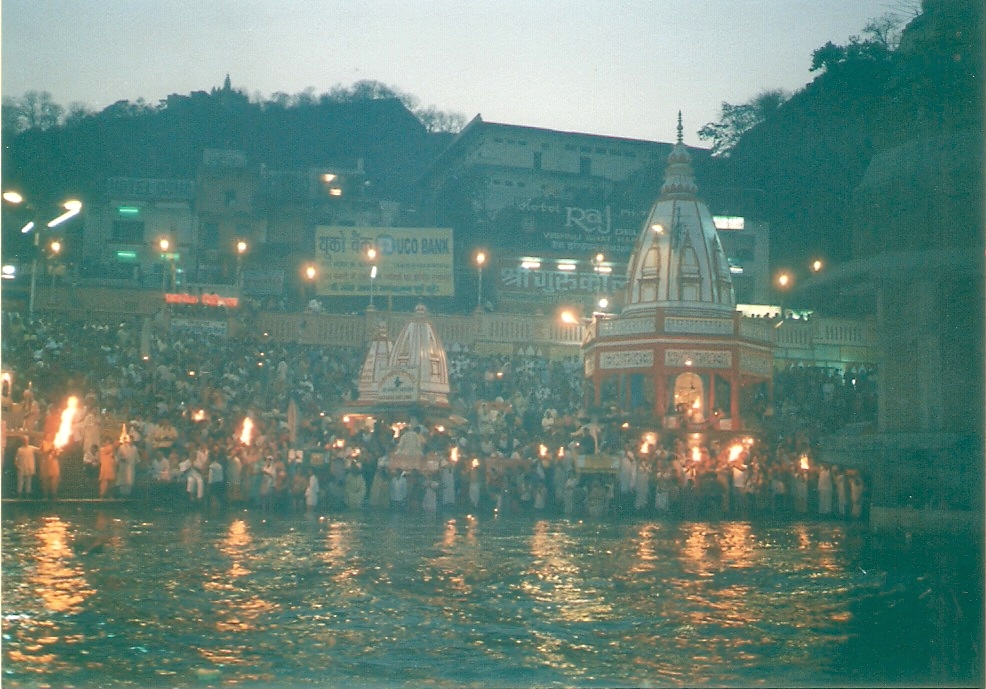
Till then, have a look at some of the awesome pictures of the  people and places I visited.


Holy Mountain Kailash

Lake Mansarovar- serenity. serenity & serenity!!

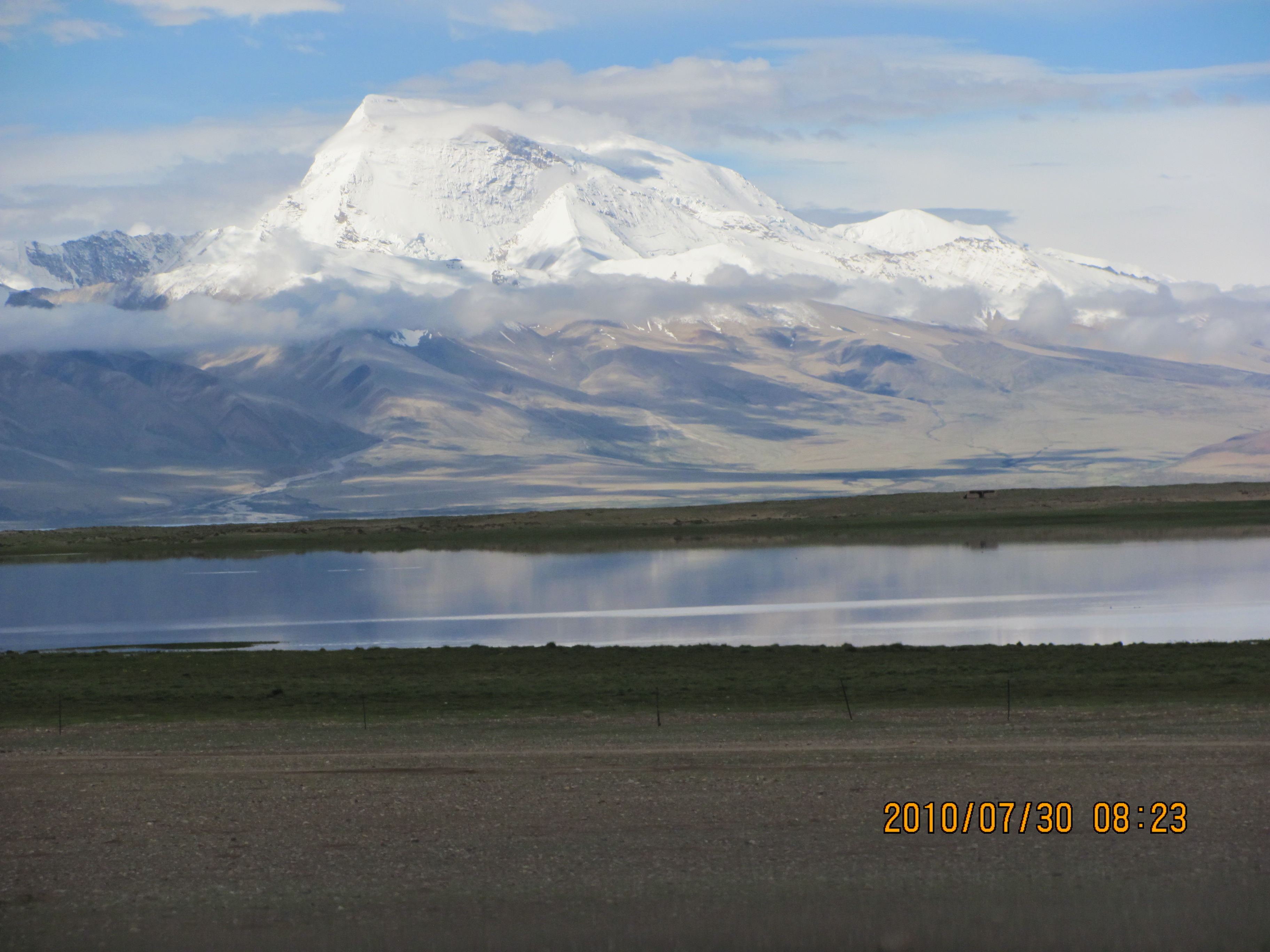
Majestic Mt.Gurla Mandhata lying to the south of Mansarovar. See its beautiful reflection in the Lake!

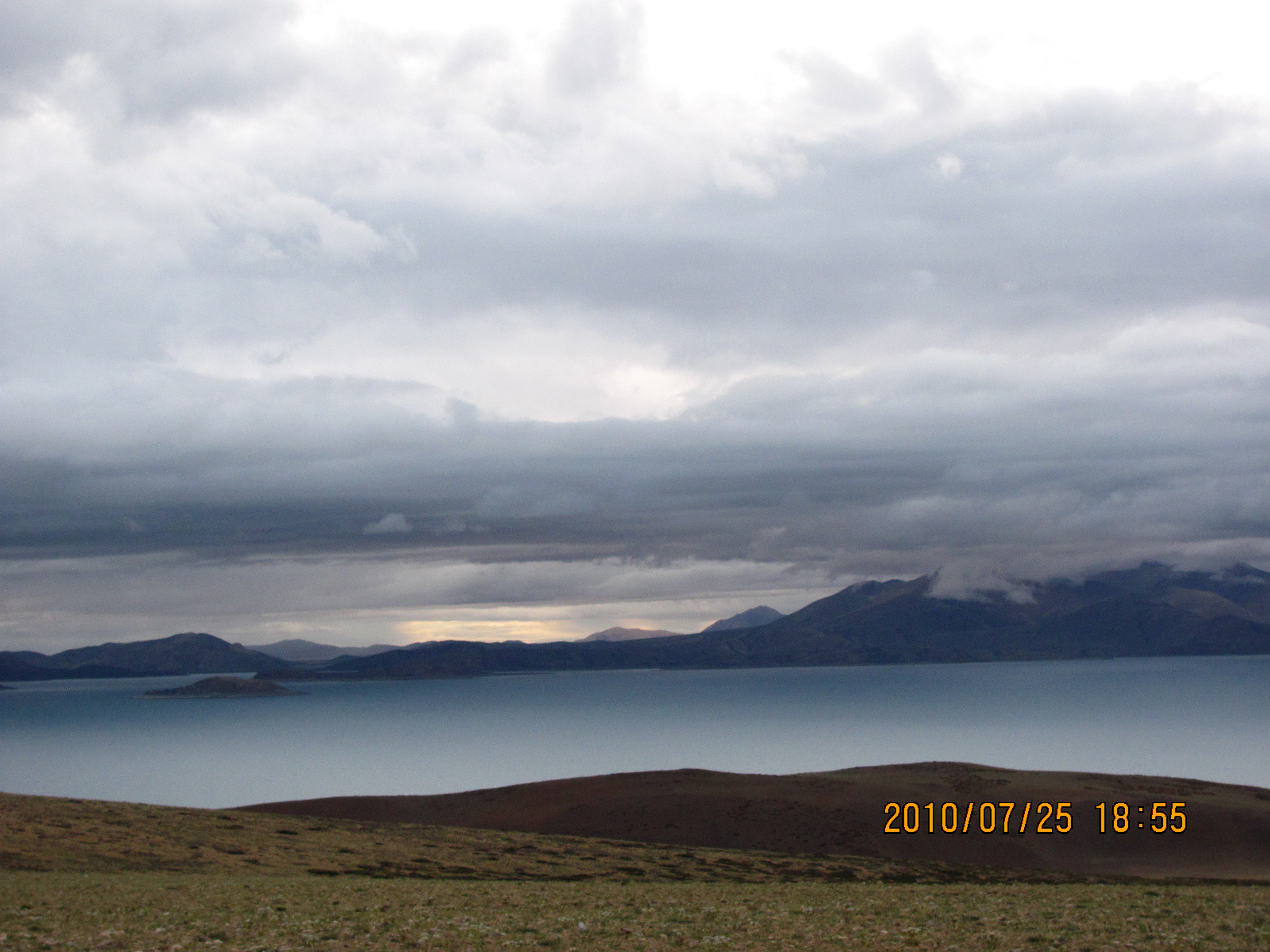
Rakshas Tal near Mansarovar at dusk. Tranquility, tranquility & tranquility!!

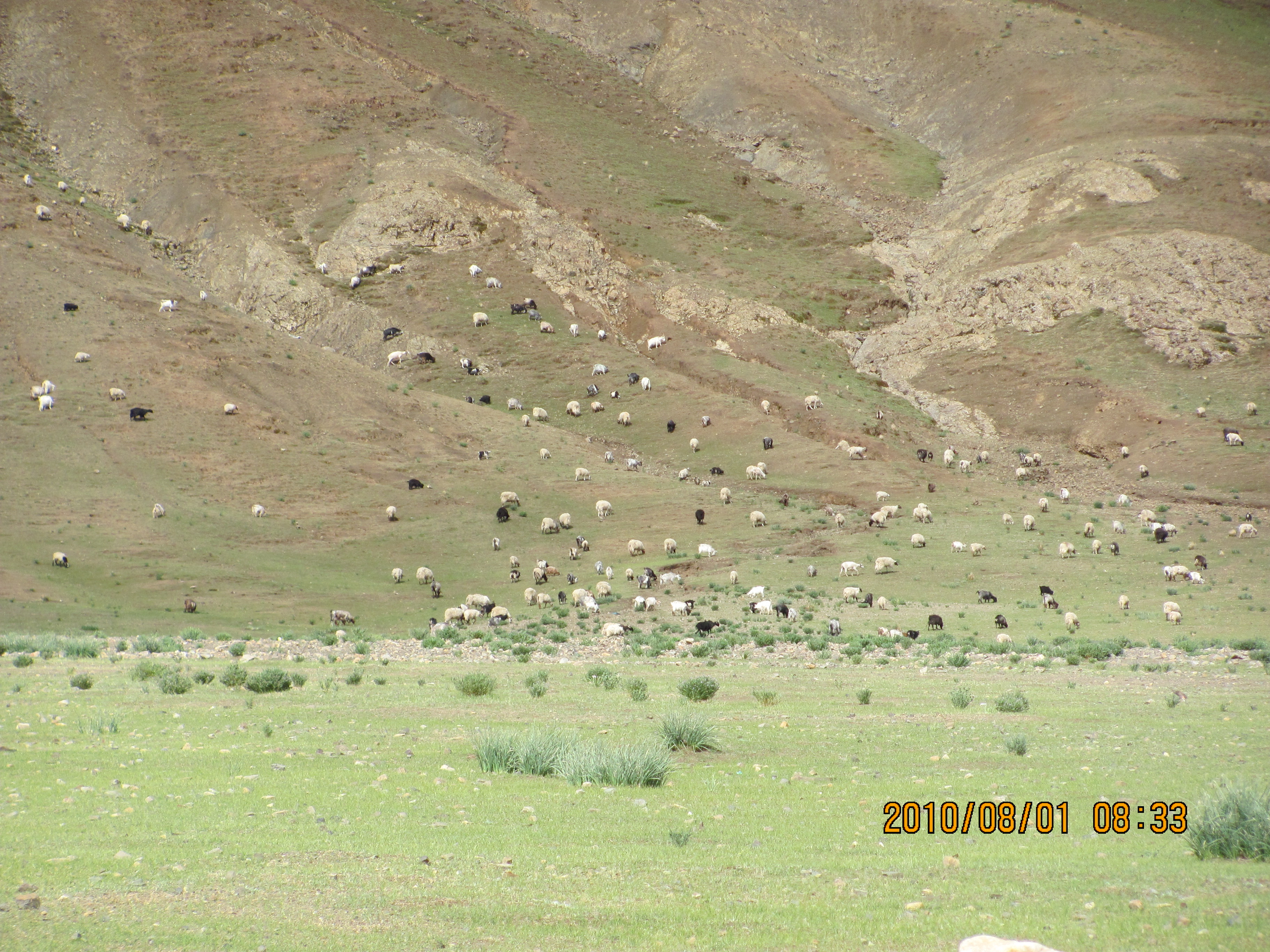
Herds of sheep grazing in meadows and mountain.

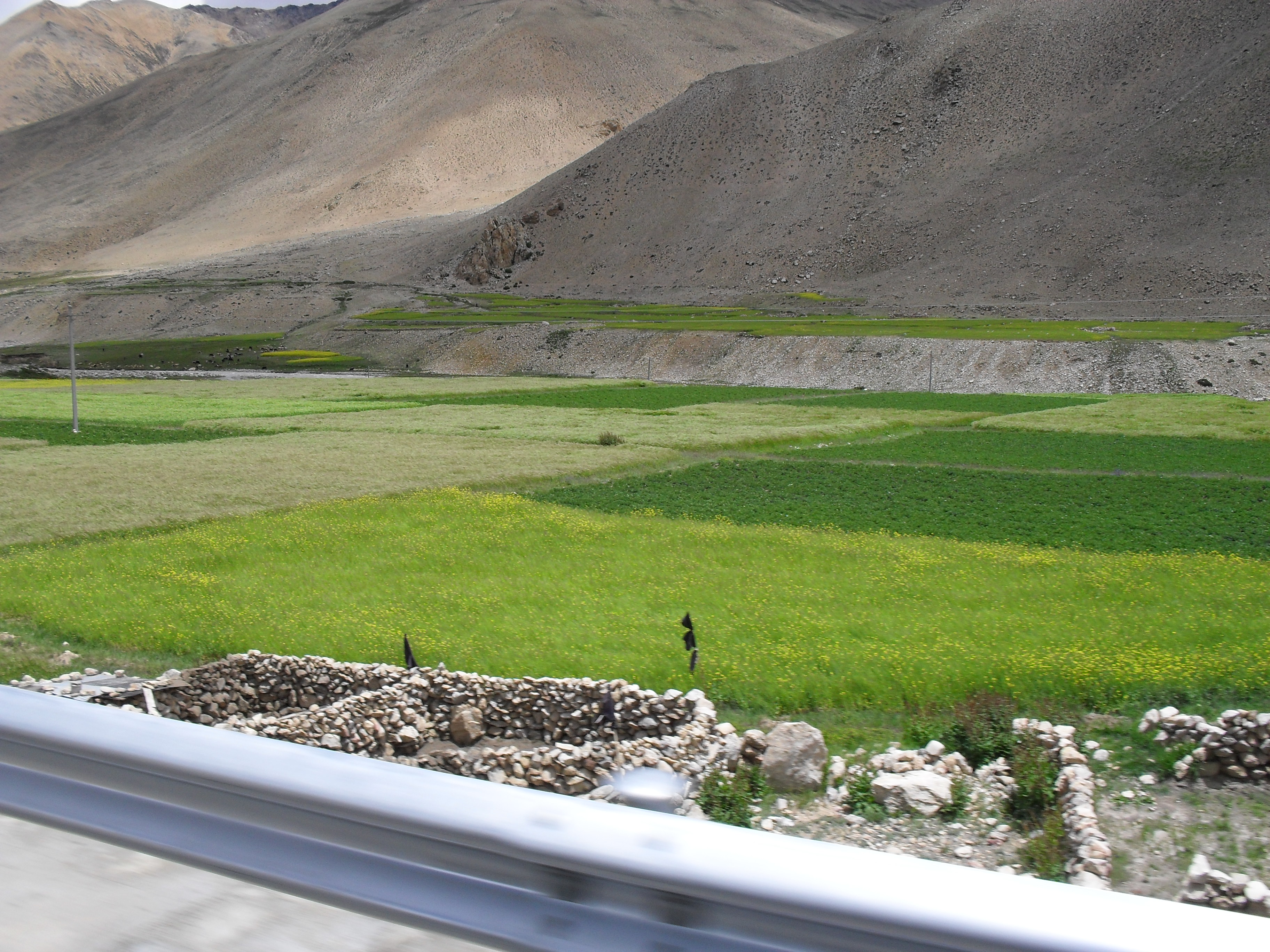
Green fields in a vast valley!!

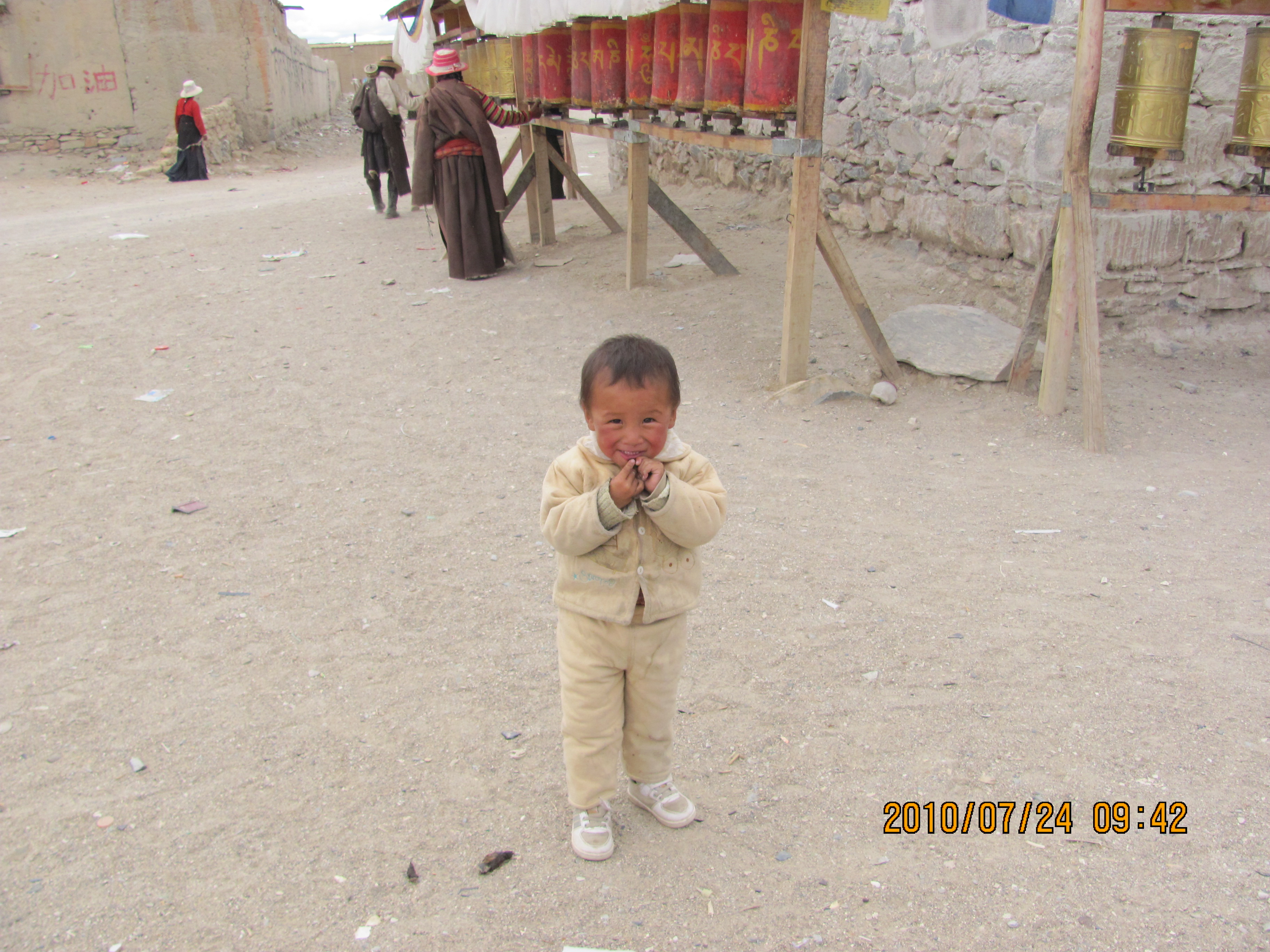
A lovely child on the street near a temple!

A woman praying on a wheel outside the temple in Paryang.

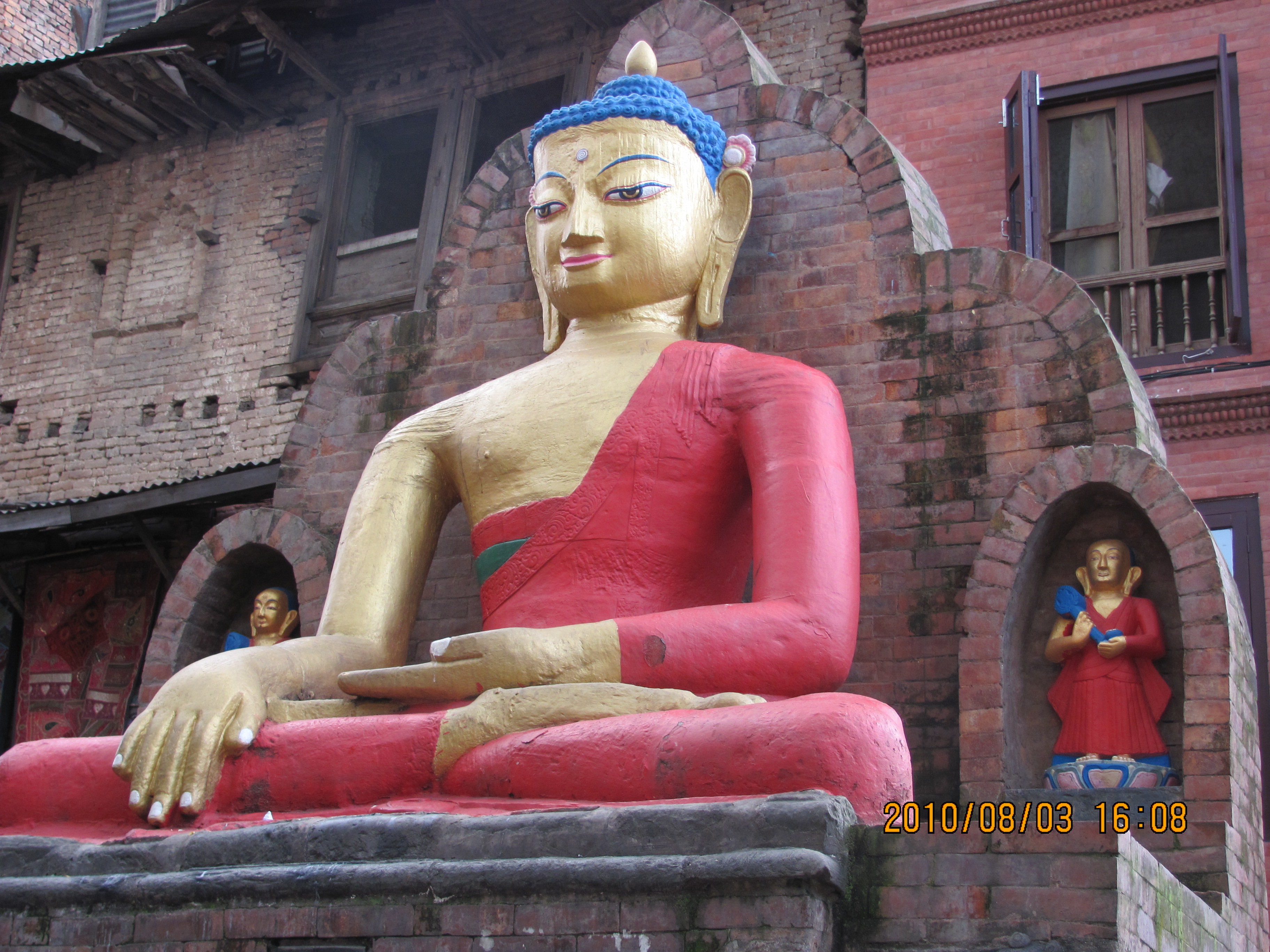
Swayambhu temple, Kathmandu

Budhaneelkantha, a temple where Lord Vishnu reclines in a pond over the cosmic serpent, Anant Shesh. Situated in Kathmandu

An adorable Chinese baby in Saga, who made friends with me and wore my ‘bindi”!! Bindi is worn on the forehead and is typical Indian adornment of a woman!!

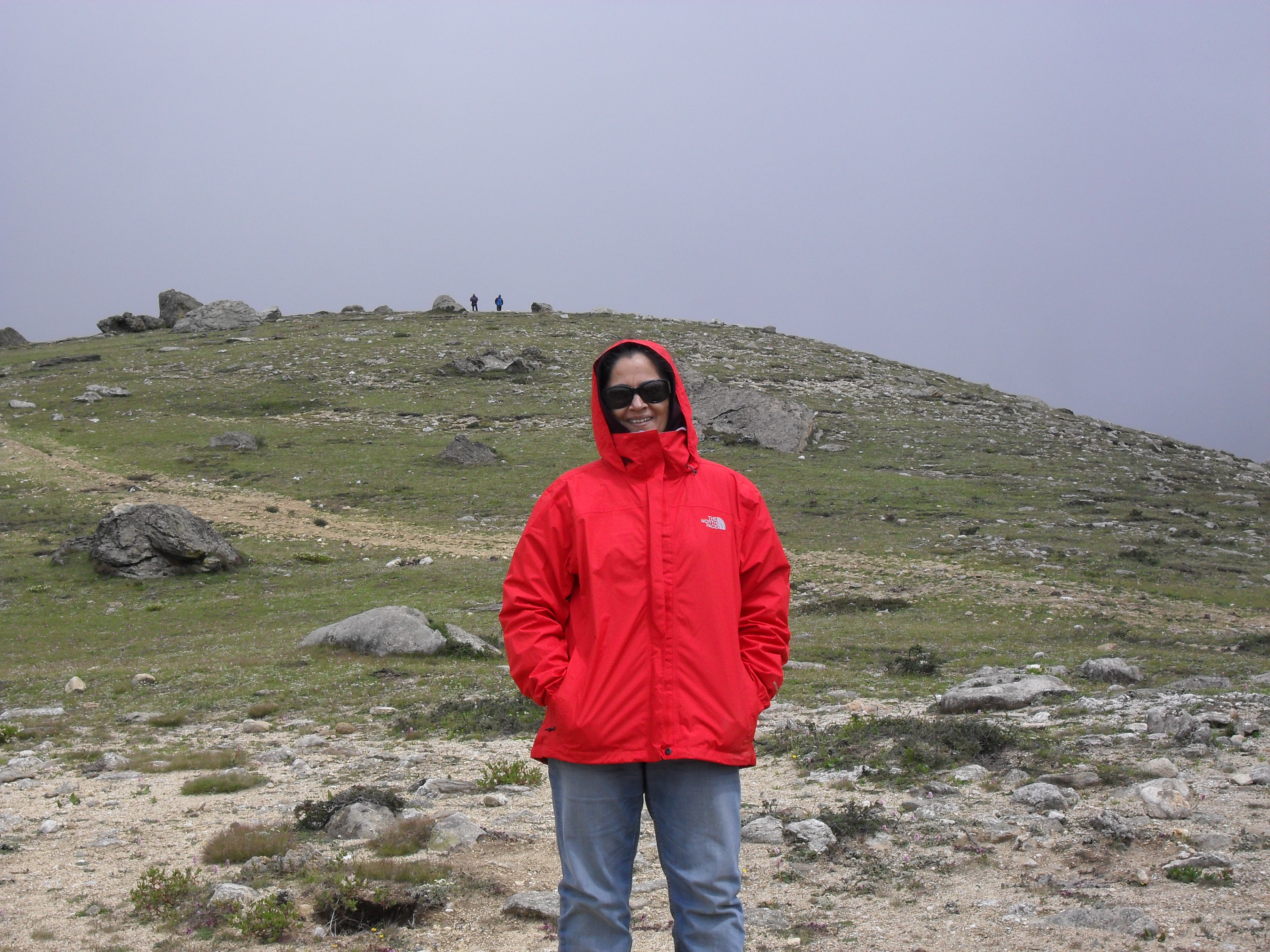
That’s me, trying to scale heights!! On a trek on a sunny day at Nyalam, China.Don’t miss those two people on top of the mountain!!

Mountain Flight in Kathmandu

Mountain peaks in the Himalayas. Seen from the mountain flight.

August 16, 2010/3 Comments/by spiritinlife
https://spiritinlife.blog/wp-content/uploads/2020/12/Header_1903x300.png 0 0 spiritinlife https://spiritinlife.blog/wp-content/uploads/2020/12/Header_1903x300.png spiritinlife2010-08-16 15:11:082021-02-28 12:04:05Back home from Mt.Kailash and Mansarovar!
Indexed, Uncategorized

Going on a long pilgrimage.

#61

Dear readers,

I am about to leave for a long pilgrimage to the Himalayas and shall return in the beginning of August.

The last post Shakti-III was the concluding post of segment B- ‘The door to Heaven’.

 I shall resume entering new posts with renewed energies and ideas after I return.

Rgds

Sarika

July 19, 2010/2 Comments/by spiritinlife
https://spiritinlife.blog/wp-content/uploads/2020/12/Header_1903x300.png 0 0 spiritinlife https://spiritinlife.blog/wp-content/uploads/2020/12/Header_1903x300.png spiritinlife2010-07-19 10:18:262021-02-28 12:04:05Going on a long pilgrimage.
Indexed, Uncategorized

Shakti-III

#60

 Life history

“I started contemplating or doing my yoga from the age of four. There was a small chair for me on which I used to sit still, engrossed in meditation. A very brilliant light would then descend over my head and produce some turmoil inside my brain. Of course I understood nothing, it was not the age for understanding. But gradually I began to feel, “I shall have to do some tremendously great work that nobody yet knows.”  

“Between 11 and 13 a series of psychic and spiritual experiences revealed to me not only the existence of God but man’s possibility of uniting with Him, of realizing Him integrally in consciousness and action, of manifesting Him upon earth in a life divine. This, along with a practical discipline for its fulfillment, was given to me during my body’s sleep by several teachers, some of whom I met afterwards on the physical plane. Later on, as the interior and exterior development proceeded, the spiritual and psychic relation with one of these beings became more and more clear and frequent; and although I knew little of the Indian philosophies and religions at that time, I was led to call him Krishna and henceforth I was aware that it was with him (whom I know I should meet on earth one day) that the divine work was to be done.” The Mother

The Mother was born Mirra Alfassa on 21st February 1878 in Paris. She was the second child of Maurice Alfassa, a Turkish Banker, and his Egyptian wife, Mathilde Ismaloun. Mirra was brought up free of all religious influence. Embroidered on little Mirra’s linen, sheets and clothes were her initials: MA.

Her early education was given at home. Her mother often told little Mirra, “You are born to realize the highest Ideal” and taught her the ‘discipline and the necessity of self forgetfulness in concentration on what one is doing.”

Along with her studies, she learnt drawing and painting in a studio and also music in which she became quite proficient. When she grew up, she made portraits in oil and other mediums and her creations were displayed in Art exhibitions in Paris. The mother of Mirra laid great stress on physical development and fitness. She was good at sports too, and learnt to play tennis when she was eight. Her much enthusiastic ambition led her to practice with accomplished players.

“I always went to the best players; at times they looked surprised but in the end they used to play with me- I never won, but I learnt much.” she said.

One anecdote from her early childhood is when she was about seven, there was a boy of thirteen years, a bully who always mocked at girls saying that they were good for nothing. One day she told him, “Will you shut up?” But he kept teasing her. Suddenly Mirra held this boy, lifted him up from the ground and threw him down with a thump although she was so much smaller than him.

At home, curious to know whether books would answer the questions she had, she read through her father’s 800 volume library. She was a voracious reader and would immerse in those thoughts while working. She loved taking long walks in the woods where she experienced extra sensory revelations. She loved nature, flowers and animals. She was serious and introspective by nature and all during girlhood, Mirra was aware of some force and light above her head. This descending light subsequently became a permanent aura around her head of which she was conscious throughout her life.

“Between the age of eighteen and twenty I had attained a conscious and constant union with the Divine Presence… all alone, with absolutely nobody to help me, not even books…There came to my hands a little later Vivekananda’s Raja Yoga- it seemed to me so wonderful a thing, you see, that someone could explain something to me. This made me gain in a few months what would have perhaps taken me years to do. Later I met a man. I was perhaps twenty one then, I think either twenty two or twenty- one. I met a man who was an Indian, and he spoke to me about the Gita. He said, “Read the Gita, and take Krishna as the symbol of the immanent God, the inner Godhead.” Well, in a month the whole work was done!”

Mirra, in the early century went to the town of Tlemcen in Algeria to learn occultism from a great Master Monsieur Theon who was a Polish Jew as she developed keen interest in spirituality. It was a period of intensive mental development leading to the realization of something luminous and true beyond the synthesis of all mental knowledge. During those years, she met the son and successor of Bahai religion and Alexandra Neel, the Buddhist traveller and writer.  She translated from English to French parts of Buddhist texts, Isha Upanishads, Narada Bhakti Sutra, the Bhagwat Gita, sayings of Sri Ramakrishna Paramhansa and some other texts.

On 29th March 1914, Mirra arrived in Pondicherry, India from Paris with her husband Paul Richard in search of Truth. They met Sri Aurobindo, the great freedom fighter, intellectual, thinker and spiritual master. Later Mirra said,

“As soon as I saw Sri Aurobindo I recognized in him the well known being whom I used to call Krishna… And this is enough to explain why I am fully convinced that my place and my work are near him, in India”

In July 1914, the first world war broke out in Europe. She had to leave for France on 22nd February, though a year later she moved to Japan with her husband and stayed there for 4 years. She continued her correspondence with Sri Aurobindo till her return to Pondicherry on 24th April 1920, this time permanently.

Mirra to Mother Mirra accepted Sri Aurobindo with perfect surrender as her mentor and spiritual guide. She was devoid of rivalry or any trace of contest.  Instead she had a deep sense of surrender to her future Master and to the Divine. There was a gradual movement towards the acceptance of Mirra by other sadhaks (aspirants), first an admiration of her as a fellow sadhak, then the recognition that she could herself give spiritual guidance as a delegate of the Master. As she assumed more and more of Sri Aurobindo’s responsibility of guiding the sadhaks, the Master was able to concentrate on his work of making a further ascent in the ladder of consciousness. She was directing the sadhak’s inner sadhana and organizing the outer life of the Ashram.

“In the beginning, Sri Aurobindo would refer to the Mother quite distinctly as Mirra. No one knows for certain on which particular date, at what auspicious moment, the word “Mother” was uttered by the lips of Sri Aurobindo. But that was a divine moment in unrecorded time, a moment of destiny in the history of mankind.” Nolini Kanta Gupta (a devotee).

Mother and the Ashram After the Siddhi day on 24th Nov 1926 Sri Aurobindo retired into seclusion and the whole material and spiritual charge of the Sri Aurobindo Ashram was assigned to the Mother. As the number of sadhaks grew from 1927 and 1933, they were assigned some service or work that was being developed by Mother, such as building work, developing the farm, the garden, the nurseries, the bakery, paper making, perfumery, dispensaries, hospitals and a horde of other activities.

Sadhana through work, meditation and devotion was intensely pursued under her astute supervision.

Mother’s mission– On 5th Dec, 1950, Sri Aurobindo left his body. On that occasion, she explained,

“Sri Aurobindo has given up his body in an act of supreme unselfishness, renouncing the realization in his own body to hasten the hour of the collective realization. Later she said, “He had gathered in his body a great amount of supramental force and as soon as he left, it passed from his body to mine.”

The Mother after the departure of Sri Aurobindo, continued his work and was actively involved in the activities of the ashram. Its activities expanded especially those of children. A school was opened on 2nd Dec 1943 and after that the Physical education department. She guided the growth of the school and she herself took classes regularly, opened exhibitions, wrote and directed plays, attended sports competitions and she played tennis with great vim and vigor with others in the playground. Every afternoon, until 1958, Mother would leave the Ashram between 4.00 and 4.30 to play tennis in the tennis ground for an hour, before going to the playground or the sports ground.

“For us spiritual life does not mean contempt for Matter but its divinization. We do not want to reject the body but to transform it. For this physical education is one of the means most directly effective.”

 On 6th Jan, 1952, The Sri Aurobindo International University Centre was organized which was later renamed Sri Aurobindo International Centre of Education in 1959. “School is just a preparation to make the students capable of thinking, studying, progressing and becoming intelligent if they can- all that must be done during the entire life and not only in school,” she believed.

Auroville- the city of Dawn was inaugurated on 28th Feb 1968. Another dream of Mother was realized – “that of a place which no nation could claim to be its own, a place where the needs of the Spirit and the concern for progress would take precedence over satisfaction of desires and passions.”

Her contact with the sadhaks was maintained through the daily Balcony darshan, the talks in the playground and through correspondence and interviews.

There were three types of people who came to visit Ma or Mother as she was lovingly called. Firstly, those type who began their spiritual journey in their present life. Secondly, those who had embarked on the spiritual journey in some previous life before and lastly those who had already completed most of their journey and their little bit of residual karmas were left to be washed away. They would attain nirvana in this life, after which there would be no aimless wandering for them. Ma would give spiritual advice and her force to all of them who sought her and asked for directions for their ascent.

Sadhana of the body Though the Mother had to curtail her outer activities from 1959 onward due to her advancing age, she nevertheless remained in close touch with the many sided life of the Ashram community. She kept a ceaseless stream of correspondence with some of the sadhaks, and gave guidance and counsel to those in charge of the various departments and services from her room itself. Although the outer activities were reduced, her new life was still more busy than the life led earlier.  It was a life dedicated to the sadhana of the body. Sri Aurobindo had said that,

“The body could even be the base for manifestation of the Divine.”

The cells of the body had to be prepared for a radical transformation, and there would be the descent into them of the Supramental Consciousness. To bring about this transformation, the Mother was working on her physical consciousness and the cells of the body. In one of her conversations, she once revealed,

“For 58 years I have been working for the body to be transparent and as immaterial as possible, in other words, not to be an obstruction to the Force that is coming down.”

(To understand this concept go to – Mental Prosperity,  A fine vessel, & Rays of Light

Conclusion  Even as the  Mother was engaged in the centenary celebrations of Sri  Aurobindo in Aug 1975, her sadhana of physical transformation continued day and night. She was seeking to carry forward the work begun by Sri Aurobindo – to bring down the Super Mind into the body and ensure its manifestation even in the densest Matter. She had consecrated her life to the realization of the Master’s vision. Her dedication is beautifully summed up in the message she gave on her ninetieth birthday.

“I came to India to meet Sri Aurobindo. I remained in India to live with Sri Aurobindo. When he left his body, I continued to live here in order to do his work which is, by serving the Truth and enlightening mankind, to hasten the rule of the Divine’s Love upon earth” The Mother.

Dear readers, let me tell you that if you are a keen aspirant, Pondicherry is a very good place for our sadhana. Actually there is nothing like an ashram there, but you will find only the two samadhis – one of the Mother and the other of Sri Aurobindo built and fused together as one. This is the place to meditate because it is really dynamic and very charged. I try to make a trip whenever I can in order to receive Force to continue doing my sadhana or spiritual practices. Those of you who can make a visit to this holy and powerful site, must try to make it. If you silently call upon the Mother with a sincere & pure heart to call you to Pondicherry, your prayers will be heard. Praying at the samadhi with a strong intention will wash away forcefully the accumulated dirt and prevalent muddy layers of darkness very swiftly. People from all over the world do come here to seek her blessings to enhance their spiritual efforts.

Food for thought

My two most favourite books on the Mother are – Rays of Light and Sunlit Path. They are passages, selections of Mother’s sayings, messages, parts of interviews and conversations with people. I have selected just a very few for the the meditators and seekers like you who are seeking now. I hope these lines and this post will benefit you in many ways on your journey to self realization. That is my prayer to God as I complete my last post on this segment titled – Door to Heaven before I embark on a pilgrimage in a few days.

Rays of Light-

On Work

  • Work as an offering to the Divine.
  •  To work for the Divine is to pray with the body.
  • Consciousness develops best through work done as an offering to the Divine.
  • Indolence and inaction end in tamas; that is a fall into unconsciousness; it is contrary to all progress & light.
  • To overcome one’s ego, to live only in the service of the Divine.
  • I make no difference between work and Yoga. Work itself is Yoga if it is done in a spirit of dedication & surrender.
  • When one works for the Divine, it is much better to do perfectly what one does than to aim at a very big work.
  •  The progress in sadhana comes from the rectification of inner and outer attitude, not from the nature of the work one does – any work, even the most humble can lead to Divine if it is done with the right attitude.

Sunlit Path-

On concentration

Q- “What is concentration?”

A- “It is to bring back all the scattered threads of concentration to a single point, a single idea. Those who can attain perfect attention succeed in everything they undertake; they will always make a rapid progress. And this kind of concentration can be developed exactly like the muscles; one may follow different systems, different methods of training. Today we know that the most pitiful weakling, for example, can with discipline become as strong as anyone else. One should not have a will which will flicker out like a candle.

The will, the concentration must be cultivated; it is a question of method, of regular exercise. If you will, you can. But the thought, “What’s the use?” must not come in to weaken the will. The idea that one is born with a certain character and can do nothing is stupid.”

Dynamic meditation

“I think the most important thing is to know why one meditates; this is what gives the quality of the meditation and makes it of one order or another.

You may meditate to open yourself to the divine Force, you may meditate to reject the ordinary consciousness, you may meditate to enter the depths of your being, you may meditate to learn how to give yourself integrally; you may meditate for all kind of things. You may meditate to enter peace and calm and silence – this is what generally people do, but without much success. But you may also meditate to receive the Force of transformation, to discover the points to be transformed, to trace out the line of progress. And then you may also meditate for very practical reasons: when you have a difficulty to clear up, a solution to find, when you want help in some action or other. You may meditate for that too.

I think everyone has his own mode of meditation. But if one wants the meditation to be dynamic, one must have an aspiration for progress and the meditation must be done to help and fulfill this aspiration for progress. Then it becomes dynamic.”

Concentrate in the Centre of Aspiration

“It is always better to concentrate in a centre, the centre of aspiration, one might say, the place where the flame of aspiration burns, to gather in all the energies there, at the solar plexus centre, and, if possible, to obtain an attentive silence as though one wanted to listen to something extremely subtle, something that demands a complete attention, a complete concentration and total silence. And then not to move at all. Not to think, not to stir, and make that movement of opening so as to receive all that can be received, but taking good care not to try to know what is happening, for if one wants to understand or even to observe actively, it keeps up a sort of cerebral activity which is unfavourable to the fullness of the receptivity – to be silent, as totally silent as possible, in an attentive concentration, and then be still.”

Meditate under all circumstances

“You may be engaged in the most active action, for example, in playing basket ball, which needs a great deal of movement, and yet not lose the attitude of inner meditation and concentration upon the Divine. And when you get that, you will see that all you do changes its quality; not only will you do it better, but you will do it with unexpected strength, and at the same time keep your consciousness so high and so pure that nothing will be able to touch you any longer. And note that this can go so far that even if an accident occurs, it will not hurt you. Naturally this is a peak, but it is a peak to which one can aspire.

Do not fall into the very common error of believing that you must sit in an absolutely quiet corner where nobody passes by, where you are in a classical position and altogether immobile in order to be able to meditate – it is not true.

What is needed is to succeed in meditating in all circumstances.

And I call ‘meditating’  not emptying your head but concentrating yourself in a contemplation of the Divine; and if you keep this contemplation within you, all that you do will change its quality – not its appearance, for apparently it will be the same thing, but its quality. And life will change its quality, and you, you will feel a little different from what you were, with a peace, a certitude, an inner calm, an unchanging force, something which never gives way.”

My sincere thanks to  Sri Aurobindo Ashram, Pondicherry for giving extensive information about Life and works of Sri Aurobindo and The Mother through their publications.

Passages and extracts from books- Sunlit Path, Rays of Light, The Mother.

One previous article which throws some light on Mother- The power of praying intensely

July 12, 2010/20 Comments/by spiritinlife
https://spiritinlife.blog/wp-content/uploads/2020/12/Header_1903x300.png 0 0 spiritinlife https://spiritinlife.blog/wp-content/uploads/2020/12/Header_1903x300.png spiritinlife2010-07-12 14:37:102023-04-11 11:12:35Shakti-III
Indexed, Uncategorized

Shakti-II

#59

Shakti is the Universal primary Force. As mentioned in the last post, it could be both-constructive or destructive. We are concerned with constructive force as spirituality involves dealing with positive force.

Prior to the post on ‘Shakti,’ 3 more articles were written about one more type of force and that was Kundalini Shakti. In those posts I have documented my personal experiences of advancing spiritual stage. In those times I merely got glimpses and visions of some saints like Sri Ramakrishna Paramhansa and goddess Kali of Dakshineshwar. But a visit to the holy city of Dakshineshwar was taken much later. Even before I made a visit, it was my earnest desire to visit the birth places of Ma Sharada, the spiritual life partner of Sri Ramakrishna Paramhansa and the birth place of her husband too. I do not know why this desire was born as I am in no way linked to West Bengal and had no connection or background of people worshiping Kali, the goddess of both- preservation and destruction. Jairambati is the birthplace of Ma Sharada and Kamarpukur the birthplace of Sri Ramakrishna Paramhansa. Both are about 6 kilometers away from each other in Hoogly district of West Bengal.

 I have visited both these places twice and have attained high degree of spiritual peace and clarity of thought. In Kamarpukur, I have seen the old house, the courtyard, the more than 160 years old mango tree under which the small house stands even today. It was here that Sri Ramakrishna Paramhansa was born. The small room in which he was born is situated there. The mango tree was planted by him and it still bears fruits. And I have seen the humble mud house  of Ma Sharada in Jairambati where she would sit for hours in the courtyard praying and chanting the holy name of Lord Jagannath or the Lord of the universe. Both places still radiate immense peace and vibrations of spiritual message and enlightenment.

These two places worth visiting are now under Ramakrishna Paramhansa Mission and are maintained very well, particularly where cleanliness is concerned.

Ma Sharada was a symbol of spiritual and divine force. Although she was not able to live  with her husband for a long tenure, she helped him and his foremost disciple, Swami Vivekananda in the worldwide mission of spreading Vedanta knowledge in modern times.

Shakti can manifest itself in a subdued and mellifluous manner. The dynamic force works quietly unseen to the eyes of people in some cases. Ma Sharada was a perfect example of such a silent force.

She spent almost all her life in Japa sadhana. Japa means to repeat God’s name silently and sadhana means to acquire or attain spiritual enhancement and advancement. She would sit silently in the courtyard or sometimes on stairs alone and was often found in the wee hours or midnight with her rosary between her fingers chanting the name of the Divine. Towards the later stage of her life, she was once asked by one of her devotees, “ Ma, why do you do japa, when you have attained the highest? What more is left there for you to do?” She answered immediately, “My dear, this japa is for my beloved children who neither somehow spend time nor have the inclination to invest their time in taking God’s name. I am doing ‘japa’ for them, for their kalyan,  for their well-being and good.”

‘Naam Smaran’ or remembering  as well as chanting of God’s holy name incessantly, repeatedly is a very good tool to trick the wandering mind. When we silently remember God by speaking or whispering or uttering his name at the back of our mind while keeping busy with our routine tasks, the subconscious mind does not absorb the prevalent negative and impure thoughts of people floating in the ether. In this way, we increase our own Shakti or positive power and reduce negativity present in or around us.

It is not possible to write the complete life history of Ma Sharada, but I will talk about a few extra ordinary incidents of her early childhood which undoubtedly point out towards divinity that she was born with.

Born in a small, quiet village of Jairambati in West Bengal in 1853, Ma Sharada was married to Sri RamaKrishna Paramhansa in early childhood. As the Divine play had, they both led a pious life.

Jairambati did not have its own market.  It was a very small village with no zamindars or rich people but the villagers celebrated all festivals with Harinam kirtan, Kali Pooja, Shitla devi pooja, Durga pooja and mythological religious plays.

Her birth was in a devout, humble Brahmin family. The father was generous and helped everyone who came to him asking for help. Her mother worked in the fields where they grew cotton. Her mother’s nature was of firm determination and she was a pious lady. She was very simple and compassionate and she used to feed many people in the villages nearby as well as people in her own village in times of famine and drought in spite of lack of funds at home. The child was showered with love and affection from parents and uncles. As a girl, Ma Sharada  was quiet, sober and diligent. Though the family was not very prosperous, her parents were very helpful and generous.  Thus the sowing of  seeds of virtues in the sacred heart of the little girl took place very early on in her life.

An extra ordinary event is associated with Ma’s birth and her arrival. Once her mother went out for a nature’s call near a pond in the evening. There was this sacred tree of Bilvapatra near the pond. She saw a very beautiful divine girl of about 5-6 years old swinging on this tree. The girl came down with soundless footsteps from the tree’s branch after which she soon disappeared. On that night, the pious mother felt that a big Force had entered her womb because of which she became unconscious. Such was the power of the Force.

At this time Ma Sharada’s father was in Calcutta.  After having lunch that day thinking of mundane things he fell asleep. He dreamt that a small girl with a golden glow has jumped up and clung to his back and wrapped her arms around his neck. The girl’s looks were extraordinary and she was wearing glittering ornaments. The Brahmin father asked her, “Who are you?” The girl answered gently, “I have come to you, receive me” After he awoke, the father felt he had a darshan of Goddess Laxmi  with all the divine aura present around her.

I have read the life story of Ma Sharada and wish to quote some important lines-

Q- “Ma, whenever I sit for japa-meditation, why am I am surrounded by all types of worries? Do something by which I may forget all my worries”.

A- “After touching his head, “From now onward, you will never worry, even the shadow of worry will not linger”

Q- “Ma, I am unable to concentrate during meditation and japa”

 A-“Continue doing japa, increase the duration of japa and if you are able to do one lakh japa, you will attain what I have told you about. Read one chapter of Bhagwat Geeta daily and if you are short of time, read just 2 shlokas. Sit in a comfortable position of meditation and do not move. If your one leg gets tired, shift to another and you will not find any difficulty.”

Q- “Is japa any different from meditation?”

A- “No, they are not contrary to each other, they are one. In fact, they both are complementary to each other. Do japa-dhyana,  do meditation through japa”

She has also told her disciples in those days that the Shakti of the Guru lies in the mantra given by him or her. Through mantra it reaches the disciples. The sins of the disciples are absorbed by the Guru. Hence after giving mantra to the chela or disciple, the Guru takes on the karmas of his disciples and his body gets diseased.

Dear readers, such is the power of a Self realized soul and a divine servant of God because of which we are able to bear the weight of our karmic consequences and are in turn able to achieve the kingdom of God.

July 1, 2010/10 Comments/by spiritinlife
https://spiritinlife.blog/wp-content/uploads/2020/12/Header_1903x300.png 0 0 spiritinlife https://spiritinlife.blog/wp-content/uploads/2020/12/Header_1903x300.png spiritinlife2010-07-01 23:27:332021-02-28 12:04:05Shakti-II
Indexed, Uncategorized

Shakti-I

#58

What is Shakti?

Shakti is a Force. It is the unseen force by which this whole Universe was created. Nobody knows who created this force and how and when was it created. Vedas have called it anadi for this reason.

Shakti cannot be seen but can be only felt by us or  we can simply say that it is aabhas matra and agochar i.e something which is not seen with the eyes.

It is only seen after it manifests itself in some activity or creativity. The Cosmic creation that we see around us is the manifestation of that One Force or Shakti.

Shakti is sanatan which means eternal and it is limitless and unending hence called anant in Sanskrit. The Force is indestructible hence very powerful and potent.

Shakti is worshiped because it is pure and benign.

The Gods, deities and the saints are the ones who possess this force and hence we worship them. In fact, it is their Shakti that we submit ourselves too.

Shakti serves two purposes- constructive and destructive.

Constructive force is silent and destructive force noisy and loud.

In all of us lies just a fraction of the Cosmic force of which we are unaware. It lies very deep inside us covered by many layers of thoughts and sanskaras. This force lying deep inside can be tapped with the help of deep meditation.

June 15, 2010/5 Comments/by spiritinlife
https://spiritinlife.blog/wp-content/uploads/2020/12/Header_1903x300.png 0 0 spiritinlife https://spiritinlife.blog/wp-content/uploads/2020/12/Header_1903x300.png spiritinlife2010-06-15 09:01:142021-02-28 12:04:05Shakti-I
Indexed, Uncategorized

Devotion-II

#57

Jai Jagdish Harey, Keshav Jai Jagdish Harey…

Some years back in my previous neighbourhood, I knew a lady who used to sing beautifully. She had a soft voice and sang very nice devotional songs. Once I requested her to teach me a few songs so that I could sing them to myself and in this way absorb my mind in worshiping God in some manner while going about my daily drab routine. One particular devotional song moved me to the core right from the moment I heard it. Whenever I would sing or memorize a specific stanza, it would bring tears in my eyes spontaneously. I would get choked as though the story was my very own. My heart would tear in pieces when I envisioned a picture of Draupadi’s appalling and pathetic state in the hands of the wretched Kauravas. And my heart would well up with gratitude when I would think and imagine how Lord Krishna came to rescue Draupadi who was distraught with so much anguish and distress.

(Image-Courtesy Google)

The words of that stanza in Hindi were-

Madho, Madho.. Tum ghat ghat ke ho basaiyya,

Madho Madho…

 Drupad suta ja din nirbal bhaiyee

Kinhi kripa dayala

Dusshasan ka maan ghatayo aru

Mukh kinho kala.

 Translation:

 Oh! Madho ( Madhav is one of the many names of Lord Krishna)

You are present everywhere. Madho, madho…

The day the daughter of Drupad- Draupadi

Became weak and was in a pathetic condition

You showered mercy on her and oh! compassionate Krishna

You shattered the pride of Dusshasan

And blackened his face.

Madho, Madho…

Now when we look back one key incident is often considered to make a definitive moment in the story of Mahabharat. It is one of the driving reasons that ultimately led to the Mahabharat war though it cannot be considered the most important one-the disrobing of Draupadi, the wife of the Pandavas in the assembly of the kings and ministers.

The Pandavas were embodiment of truth, justice, fairness and valour while their cousins the Kauravs, who wished to usurp their capital and kingdom of Hastinapur were full of jealousy, deceit, conspiracy, lies and falsehood. They with their vicious uncle Shakuni and loyal friend Karan were constantly scheming to remove them from their path so that Duryodhan could become the king of Hastinapur. As one of the many eliminating measures, they once invited the Pandavas  for a game of dice in a move to take away their legitimate rights. As it had happened earlier too, the Kauravas cheated and thereby won the game. Yudhisthir, the eldest Pandava lost his kingdom and everything else they owned.  So much so, the Pandavas became their slaves and surrendered their princely dress, crown and jewels in the last round of the game.

Seeing this, the Kauravas rejoiced and felt very happy. To add more to their insult, Duryodhan on the advice of malicious Karan, decided to humiliate their wife Draupadi now.  Duryodhan asked his younger brother Dusshasan to get Draupadi in the hall where women were not allowed. Since she was no more a queen but a slave like her husbands, he ordered that she should be treated like a dasi or slave woman. The robes and adornments should be relinquished by her now in public, he said. Unfortunately Dusshasan agreed to do this horrifying act. This sad incident also reflects on the state of affairs that prevailed then and shows clearly that the society had degenerated to abysmal low. The people became very immoral and unholy as is evident in this story.

But to continue with our story, let’s move on…

Draupadi was in her chamber unaware of the fact that the Pandavas had put everything they possessed on stake in the gambling and had now become slaves. She vehemently refused to either come in the hall or accept the fate and conclusion of the game. So Dusshasan forcibly held her arm with his one hand and with the other clutched her long and open hair and dragged her mercilessly in the court hall abusing her all along. In those days, it was considered immoral for women to keep their hair open in public and they were  expected to be properly clad and covered. She was in a state of complete shock and horror. Draupadi pleaded to him and begged not behave so mercilessly and let her go. She reminded him that after all they were brothers and cousins and she his sister in law.  Such a cruel and immoral behavior would bring dishonour to the family and their forefathers. But all her pleas fell on deaf ears. On arriving in the hall, she frantically appealed to Bhishmpitamaha, Dronacharya, Kripacharya, the gurus and the elders assembled there to put a halt to the shameful act of Kauravas and save her dignity. But they had no courage to speak against the vindictive and shameless Duryodhan, Shakuni, Dusshasan and Karan.

Draupadi then turned towards the Pandavas and cried bitterly. She asked them to save her and restore her honour. But alas they were helpless ! How could they save her as they had already lost their freedom as well as their entire kingdom and were unfortunately slaves now. They had lost everything in the game of dice which they played with their cousins.  Their heads hung in shame and repentance. They were helpless.

Dusshasan dragged her in the centre of the court hall and pulled her down to the floor and began unwrapping her sari in order to undress her to the horror of all the spectators gathered there. The Kauravas took pleasure and laughed with spite seeing their enemy’s wife being tormented, abused and insulted in the most awful manner.  They were at last able to take revenge born out of jealousy and hatred harboured since childhood. Draupadi was aghast and speechless. She had no one to go to and no one to ask for help now. She did not participate in the game yet was a victim of enmity. All her pleas and appeals were in vain and she could take it no more.  But she was not a woman who would give in easily. She realized that now there is one and only Lord Krishna who could rescue her from this evil omen and save her self respect and nobility. Her Lord had always come to her rescue and saved her from every difficult situations earlier too. When all human help failed her, she turned towards the Lord of the Universe. She surrendered herself completely and  began to pray fervently. She appealed to Him to protect her from the evil souls surrounding her. Draupadi invoked the omnipresent Lord manifested in Krishna and began calling Krishna with her heart wrenching soul call…

Hey Krishna, Hey Govind, Hey Murari,

Mori laaj rakho Giridhari.

Hey Krishna, Hey Govind, Hey Murari,

Mori Laaj rakho Giridhari.

Translation:

Oh my Krishna, oh Govind, oh Murari

Save my honour Giridhari.

(Govind, Murari, Giridhari, Keshav, Madhav, Vasudeva, Damodar are all synonyms of Krishna in accordance to his qualities and leelas)

Lord Krishna at once responded to the urgent need of his devotee. How could He allow anyone to bring shame and dishonor to his committed devotee? Lord Krishna knew what the the need of the hour was and gave her immediate relief in the form of cloth. A miracle occurred when the length of Draupadi’s sari became unending.  It would not end at all as Bhagwan Krishna went on supplying the cloth infinitely! Eventually, after futile efforts to unwrap the endless sari, wicked Dusshasan fell on the ground unconscious. He never succeeded in his evil attempts of dishonoring the wife of Pandavas and a devotee of Lord Krishna. Instead he faced a painful death in the hands of Bhima in the war of Kurukshetra.

God is omnipresent. Devotion is complete surrender to God, unconditional trust and faith in God.

Harey Ram  Harey Ram Ram Ram Harey Harey, Harey Krishna Harey Krishna Krishna Krishna Harey Harey

(In the previous and present posts, I have written a few shlokas and mantras. If you wish to devote some time  in chanting, I leave them here for you. Please repeat them incessantly and observe how the mind gets dissolved and immersed gradually in divine unity. Chanting even just one of these lines will give you tranquility and calmness in the agitated mind. Continuous chanting the name of God loudly or silently gives spiritual bliss. Choose any one of the chants of your likes and begin now.

Om Namo Bhagwate Vasudevaya…,

Keshav Jai Jagdish Harey..,

Harey Ram Harey Ram Ram Ram Harey Harey Harey Krishna Harey Krishna Krishna Krishna  Harey Harey…, 

Hey Krishna Hey Govind Hey Murari…,

Some more if you want to memorize and chant them.

Achyutam Keshavam Krishna Damodaram Ram Narayanam Janki Vallabham…,

Vasudeva Vasudevam Kansachanur mardanam, Devaki Parmanandam Krishnam Vande Jagat gurum…,

Shri Krishna Govind Harey Murare Hey Nath Narayan Vasudevaya

Om Shanti Shanti Shanti Om…

(Courtesy Google image)

June 1, 2010/10 Comments/by spiritinlife
https://spiritinlife.blog/wp-content/uploads/2020/12/Header_1903x300.png 0 0 spiritinlife https://spiritinlife.blog/wp-content/uploads/2020/12/Header_1903x300.png spiritinlife2010-06-01 08:53:322021-02-28 12:04:05Devotion-II
Indexed, Uncategorized

Devotion-I

#56

 Devotion  is the beauty of the soul.  It is love for God. Devotion melts all impurities and cleans your soul.

  Shri Krishna Govind Harey Murare, hey Nath Narayan Vasudevaya. Shri Krishna Govind Harey Murare, hey Nath Narayan Vasudevaya.

When the Pandavas were sentenced to thirteen year exile in the forest with their wife Draupadi by the Kauravas, Yudhisthir was despondent at his inability to feed the sages and others who accompanied him. Looking at his plight, his priest counselled  him to pray to Lord Surya, the Sun God for help. Pleased with the justifiable prayers of Yudhisthir, Lord Surya blessed him and gave him ‘Akshaya Patra.’

Akshaya means limitless and patra means a vessel, a container. Akshaya Patra means an inexhaustible vessel. It is an object from Hindu mythology given to Yudhisthir by LordSurya. It had a never failing supply of food for the Pandavas every day. The vessel would supply endless quantities of food for each meal for them and the supply would run out only when Draupadi finished eating her meal, usually last.

Once unexpectedly, rishi Durvasa and several of his disciples arrived at the hermitage of Pandavas. There was no food to serve them since Draupadi had already finished eating which made the Pandavas nervous. The Pandavas knew rishi Durvasa could get enraged easily and when angered could even curse them. Durvasa rishi expressed his desire to first take a bath in the river Yamuna situated close by and then partake the food.

As they left, Draupadi prayed intensely to Lord Krishna for help to escape the wrath of the sage. Krishna heard her intent prayers. Providentially, He arrived at their doorstep and Draupadi apprised him of her problem.

Draupadi was an ardent devotee of Lord Krishna and would always seek His advice on matters, spiritual and worldly both. She had great veneration and adoration for Krishna and Krishna lovingly called her sakhi or friend. Draupadi was not only Krishna’s friend but also his faithful follower. Seeing no solution to the problem at hand, she pleaded for help and asked Krishna to rescue her and her husbands. How could she arrange for food for so many people in the forest?

As it happened several times earlier, the Pandavas were once again saved by Lord Krishna. He asked Draupadi to get him some food to eat, to which Draupadi replied that all the food for that meal had been consumed. Krishna insisted on eating something atleast. He asked her to bring whatever food was left over for him.

Draupadi was embarrassed and reluctantly got a vessel from the kitchen which had only two grains of rice in it. Krishna happily ate those two grains and smiled mysteriously. He chuckled and told her that he felt full now and then He went his way.  Krishna’s eating two grains of rice miraculously satiated the hunger of Durvasa rishi and all his disciples at the river bank.  They decided not to go to the Pandavas at all as they were not hungry anymore!

In this way, the pride and glory of the Pandavas was saved and a devotee’s sincere call heard by the Master of the Universe.

The satisfaction of Lord Krishna meant the satisfaction of the whole universe.

When we worship God, we get everything in return in unlimited supply. God protects us, saves us from worries and rescues us from unexpected problems.

(To be continued)


May 15, 2010/8 Comments/by spiritinlife
https://spiritinlife.blog/wp-content/uploads/2020/12/Header_1903x300.png 0 0 spiritinlife https://spiritinlife.blog/wp-content/uploads/2020/12/Header_1903x300.png spiritinlife2010-05-15 17:56:322021-02-28 12:02:09Devotion-I
Indexed, Uncategorized

What is renunciation?-II

#55

Recapitulating-I had mentioned Mahavatar Babaji’s views on renunciation and teachings “Our whole life is nothing but our ‘prarabdh,’ destiny and we must live upto our ‘prarabdh’ with a sense of detachment and that is ‘sannayas’.

I had told you about the life and works of Sri Lahiri Mahasaya in the last post, who was typically a householder yet detached from within and was merely interested in service, meditation and dispersing wisdom. I hope you enjoyed reading it and appreciated my effort in doing some kind of service to my spiritual masters and humanity as well. And I thought to myself that explaining lofty ideas becomes much simpler if we see or come to know a few persons who are good examples and role models for us to follow. For this reason this post is an extension to the previous one.

However, the question that subsequently arises at this point is- if renunciation is just a sense of detachment and is possible while living your present life, which is nothing but your destiny, how should one live as a householder?  How not be completely immersed in the transitory world and do bhakti or devotion and serve the appointed spiritual master? Is it possible? How? Are there any living examples and any footsteps to follow?

I know of one more saintly man or ‘Divya Purush’ to be precise, who falls in this category as a perfect example who played his role perfectly well by being a sannayasi yet was living right in the middle of hustle and bustle of a city life and was in a job and performed all his roles of an individual, employee, devotee and God’s servant, all rolled into an epitome of perfection as untainted and unparalleled was his whole life!!

Whatever little I have gathered over the past few years, I wish to share with you all on this blog. I have been profusely blessed in my personal as well as spiritual life by him, as I chanced upon Swami Dayananda Shaligram one fine day by meeting his living and initiated devotee on 27th April, 2002 by a quirk of fate. Although Shaligram Swami is no more, his good teachings and spiritual vibrations are still here.  His absolute selfless service to humanity still goes on silently through divine, beatific vibrations from his samadhi in Ganeshpuri, about 70 kms away from Mumbai.

Brief life history

Very little is known about Swami Dayananda Shaligram’s birth and early childhood because it is lost in anonymity and it was also his earnest desire to live and remain in obscurity. But it is believed that he was born in a humble family of devout parents somewhere in an unknown, small village in Kerala state bordering with Karnataka in the year 1929 in the month of Bhadrapad,  according to Hindu calendar, that is sometime in August. As a child he used to get vivid dreams of mountains and rivers and ashrams. He was quiet and reserved by nature and was sober and contemplative from the time of his birth.

He could foresee that his life was brief and he had to do ghor tapasya, intense penance during this period itself. He was very focused and one pointed in his pursuits and endeavours which ever he undertook. Much against the wishes of his parents, he once set out on a pilgrimage alone as a youth in search of a guru. He reached the banks of river Narmada where he took a holy dip in the sacred waters. It was there in meditation that he got a divine vision of Swami Nityananda and he heard his guru calling him. He immediately left for Ganeshpuri, pretty directionless but very firm in his resolution to meet his soul mate and beloved Master of many lives.

He somehow reached Ganeshpuri after an arduous journey and met his Guru. None of them spoke a word!  In the divine presence of Swami Nityananda, he could immediately recall his past lives. He could also now recollect when he was in the astral world before he became Swami Dayanand Shaligram, how he had pleaded and prayed to Swami Nityananda to incarnate on the earth as his guru and he would become his humble devotee and servant for mitigating the woes and sufferings of millions of souls on the earth. Swami Nityananda had no desire to come down on the physical plane as He was in bliss in the astral world. But the humble and sweet request of a selfless soul compelled him to fulfill his wish. And subsequently one became the mighty Guru and master Swami Nityananda and the other became a humble devotee, Swami Shaligram. Therefore we must be grateful to Swami Shaligram as it was at his behest that Swami Nityananad came in this world for the welfare of countless people, just in the way we must be thankful to Lahiri Mahasaya for reviving Kriya Yoga in modern world to householders.

Swami Shaligram took refuge in Swami Nityananda’s feet and expressed his desire to serve him as well as work for him. Nityananda  Baba asked him to continue working in his job and along with that do his tapasya, penance.

After a lapse of a few years, he did intense tapasya by keeping maun, silence for three years after which he began serving the people of Mahul, a sleepy hamlet of fishermen on the creeks of Bombay. He began living there after the people appealed to him.  They also served him in their own ways as a token of service and gratitude. Though Shaligram Swami  used to live in Mahul, he made very frequent visits to Ganeshpuri on weekends and other holidays to be with his divine guru for his affection and infallible wisdom. He showered his intense love and reverence for his guru and would always address him as ‘Dev,’ God and called himself a ‘bhakt’, a devotee.

They hardly spoke to each other as their mental communication was very well established, it was unbreakable and flawless. They would sit together in silence gazing in eternity!

Swami  Nityanand guided him in his spiritual practices as well as in practical life too.  He also asked him to serve the people in Mahul which he did happily. Although he had renounced his family in Kerala, Nityananda Baba gave him a much larger family to attend to the old, sick and poor people whom he restored back to life and health. The sick were healed by miracles and divine healings and many people’s unfulfilled desires were fulfilled as and when they approached him.

And then there were a few who loved Shaligram Swami for his extreme devotion and depthless knowledge. But they were just a few! They arrived not for mercy or miracles or material considerations but for salvation or mukti and  bhakti,  devotion. Swami Shaligram showed them their path of salvation according  to their karmic patterns, capabilities and level of endurance. He would promise and assure the seekers that he will always hold their hand to give them much needed mental support to overcome the difficulties of everyday life as well as tough suffering of karmic bondage which they would have to overcome for salvation. He pledged and promised those true and devoted disciples that he will never forsake them until the destination and goal of attaining mukti and  karmic bondage is not attained. Such was his assurance and commitment towards his disciples. He gave advice to commoners, learned, householders and all those who came for help to him. No wonder he was the most beloved of all the many disciples of Swami Nityananda and they both were inseparable, although they hardly spoke to each other. But their inner communication was enduring and unbreakable. Mahavatar Babaji calls Swami Shaligram Swami as my ‘laadla’ or very dear one because of his purity and flawless devotion towards his divine guru.

It holds true even now although he is living no more, that whosoever takes his refuge with a true and pure heart, he will never be disappointed. If we remember him with a pure heart, he responds to our needs without any delay. If we wish to clear our baggage of past lives and find it difficult to carry it out alone, he invisibly lends timely help and rescue. If one is destined to become his disciple due to one’s past karmas, then he will definitely become so.

Swami  Shaligram  loved his guru the most, more than anything in this world so much so that he could never even dream of being separated from his master. So when he discovered that Swami  Nityanand is about to leave the world, he decided to take jeevant samadhi, a conscious exit from his body by some yogic powers by stopping his breath which he had mastered earlier. He relinquished his last breath on 27th April 1961 in Ganeshpuri by chanting Ram rakshastrotra mantra. His samadhi temple was built on that spot and he rests there very close to his master today. He came in this world to show us what should a perfect devotee be like, how should one live in the family as a householder performing his worldly duties and continue doing his sadhana.

                                 Shree Ram, Jai Ram, Jai Jai Ram 

He would chant this mantra for hours and reach an ecstatic state and deep peace in solitude. This post is dedicated in his loving memory as a symbol and epitome of endless love of a disciple towards his spiritual teacher. I consecrate and offer my heart and soul for such exceptional souls who visit earth so rarely yet leave their sweet fragrance for centuries to come. May we all be inspired by a true devotee, a  bhakta, a  yogi and a supremely beautiful soul. May our souls pay homage to such a celestial and virtuous incarnate.

His views on renunciation and his valuable teachings Our whole life is nothing but our destiny.  Do not relinquish your duties.  Live your life with a sense of detachment and not self-punishing involvement. 

Do not run away from your life which is your destiny, fulfill your destiny as it is created by no one else but you. Living your destiny with detachment is renunciation and sadhana. Do all the spiritual practices or sadhana while staying at home. Do not reject your present life, instead awake, arise and enlighten yourself where ever you are placed.

He agrees that sometimes living your destiny is very tough and difficult but none the less it is possible to exhaust the karmas with faith and devotion. If we run away or relinquish our duties we will still have to face the same situations in some life ahead in the future lives yet to come and on the contrary we will only pile up the karmas, counted as accumulated or sanchit karmas.

Serve your parents Do not shy away from your duties of serving your parents, children and other elders.

Be fair in your relations at home, place of work and society. Respect and love your wife. Appreciate her contribution in building up the family, do not deprive her of money and other basic facilities. Be humble, kind and understanding to your servants and helpers.

Women must have high moral and spiritual standards because she is the backbone of the entire family and a builder of future generations. She should handle children with love, understanding, affection, intelligence and tenderness, yet be firm when it comes to inculcating good moral and spiritual foundation very early on in life.

Make your family a heaven and a paradise Give respect and love to all members equally.

The elders should not be on an ego trip but help the younger ones to bloom and flower into responsible and worthy citizens and individuals for posterity.

Even if people harass or inflict upon us, we must not retaliate or get tormented Those people who are unkind towards us will in due course of time bear the consequences for their wrong doings.

Be compassionate towards the ill, old and dying people Have mercy on the deprived and poor people and serve them food, clothes and give monetary help.

Serve your Guru by following his teachings. Serve the learned and men of wisdom and intelligence. Fulfill your religious duties.

Be just and fair in your dealing and handling of money Do not indulge and splurge money in evil and immoral ways. Save for your future and also donate generously.

Have mercy and compassion for animals and all other living creatures of God

Swami Dayananda Shaligram’s ashram is in Mahul where annually the birth anniversary of Swami Nityananda is celebrated by the locals even today. He used to celebrate his Guru’s birthday by feeding the masses and chanting ‘Shri Ram Jai Ram Jai Jai Ram’ for a week. Swami Nityananda is in bliss on this day and blesses all who come to take his ‘darshan’ on 30th Nov every year. Those who can visit Mahul ashram should go and take the blessings of both the divine souls on this auspicious day.

Mahul Ashram

The devotees of Mahul and other places perform a pooja and bhandara every year on 27th April on the samadhi divas in  memory and respect of Swami Dayanand Shaligram in Ganeshpuri.

Samadhi mandir

 Related posts:

How to make your life extra-ordinary from ordinary?

How to be a perfect receptacle of Guru’s Grace?

To know more about Swami Nityananda of Ganeshpuri read

Ignite the flame of illumination

May 1, 2010/23 Comments/by spiritinlife
https://spiritinlife.blog/wp-content/uploads/2020/12/Header_1903x300.png 0 0 spiritinlife https://spiritinlife.blog/wp-content/uploads/2020/12/Header_1903x300.png spiritinlife2010-05-01 04:20:102021-02-28 12:02:09What is renunciation?-II
Indexed, Uncategorized

What is renunciation?-I

#54

I concluded my important tasks of the day on 8th afternoon and I was longing for some sleep. As I rested on the bed closing my eyes, a while later, I slipped into subtle meditation with this vivid image of Shri Mahavatar Babaji emerging before my eyes.

The picture had a very calming Prussian blue background and this particular colour also gives a very mystique aura to the personage of Babaji, at least to me it seems so. The mere presence and thought of revered Babaji instills a sense of protection and security within me. I feel that He is ever present, silently watching over me like a mother bird in the sky. There is an unquestionable assurance of safety and shelter in the celestial love that He emanates for his disciples. Implicit trust resides in the hidden caves of my heart for the unending love that He showers for me and my dear ones. So when his emergence was being indicated, I simply became peaceful and relaxed.

Without making me wait, He began to communicate by murmuring, “My dear child, I am keeping an eye on you. I am aware that even amidst frenzied days, you are collecting your thoughts on and off to write the next article on renunciation. You have also read a few pages of Holy Sri Bhagwad Gita to recollect what you have imbibed some years back. Lahiri Mahasaya was my foremost disciple. I want you to dedicate one article in his memory and honour”.

Now alongside with this ongoing communication, I also had the privilege of having a mental picture of Lahiri Mahasaya with his blissful face and unblinking half closed eyes, as though he was oblivious to the crazy world and was in peace in spite of the chaotic nature of the maddening world that one lives in. I was very intrigued by the fact that Babaji had virtually scanned my mind and was peeping inside its concurring developments overtly. It is true that in the last few days, I have been randomly getting some glimpses and mental images of Lahiri Mahasaya on and off which assured me that something auspicious was about to take place. And I was wondering what could be its connotation. On those words of Babaji, I immediately connected the chain of developments and waited in anticipation as to what was coming up next.

Babaji continued, “I know that recently a desire has germinated in your heart of paying homage to Lahiri Mahasaya by visiting his samadhi. I will fulfill your wish this time. Though you have gone to Haridwar several times but never even knew that the some sacred ashes of my beloved disciple rests there. Your time had not come then, but this time you will pay homage to him.”

Well, before I put all my thoughts into words, I will first of all pay my obeisance to Yogavatar Lahiri Mahasaya right here. My humble prayer at his holy feet to guide me to write this post and I also seek his divine blessings for myself and all the sincere seekers for quick spiritual progression and ascent.

To start on, a brief life sketch of this great mahayogi of India becomes essential at this juncture.

Shyama Charan Lahiri was born in Bengal in the year 1828 on September, the 30th in a pious Brahmin family. The family worshipped Lord Shiva, the lord of Yoga and they also had a Shiva temple in the house. At the age of three or four, he was often found sitting in certain yoga postures effortlessly.

The family later moved to Banaras, an ancient city on the banks of holy Ganga, after their house and the Shiva temple were lost to shifting of the course of a nearby river. Very early on, he showed signs of a gifted boy by being a linguistic. He received instructions in Sanskrit, Bengali, Urdu, French as well as English.  He studied Vedas, listened eagerly to the scriptural discussions of learned Brahmins and also recited the shlokas from Gita. Bathing in Ganges, reciting shlokas and worshipping were a part of his daily routine. At appropriate time he got married and became a house holder. His work as an accountant in Military engineering dept of the English govt took him all over India. After the death of his father, he took on the responsibilities of the entire family and also bought a house for them in Banaras.

In 1861, Lahiri Mahasaya was transferred to Ranikhet, in the foothills of the Himalayas. One afternoon, while rambling in the hills, he heard a distant voice calling out his name on Drongiri mountain. After climbing a bit further, he found his lost guru Shri Mahavatar Babaji on a spot on one of the ledges. Babaji smiled mysteriously and called him ‘Gangadhar’, his name of previous life. He awakened his memory of past life by touching his forehead gently. He then initiated him in the ancient science and technique of Kriya yoga. He asked him to revive this lost spiritual science and technique of salvation in modern world and to remain a householder, whereas Lahiri Mahasaya wanted to renounce the world after meeting his beloved master of past life. So much was his love and adoration for his exalted master.

On the contrary, Babaji asked him to be a karam yogi and give knowledge and guide people from his home. And that’s what he did all his life after meeting his teacher. At his house, he initiated countless people into Kriya Yoga from all walks of life and religions. Over time, more and more people flocked to receive his teachings of Kriya. He organized many study groups and he gave religious discourses on Bhagwat Gita too.

He continued his job as an accountant and supported his family. He was a Master of Kriya Yoga and retired on a modest pension. More and more visitors came to see him as time passed and he seldom left his sitting room available to all who sought his guidance and darshan. He attained a very high state of ecstasy, a state of super consciousness or samadhi. He had overpowered sleep and he would be found sitting in an interlocked lotus posture all night giving spiritual knowledge to deserving people. He led a harmoniously balanced life of a great householder and became an inspiration to thousands of men and women.

Dear friends, I wish to reveal a fact to you that initially Babaji had instructed Lahiri Mahsaya to be strict in passing on and unraveling the holy science of meditation to only the qualified students. But at this point, Lahiri Mahasaya pleaded to Babaji to permit him to initiate and communicate Kriya deeksha to householders too who were sincere seekers, although at first they may not be able to vow themselves to complete inner renunciation. He argued that if Kriya was withheld from them, they would never attempt the road to freedom.

Babaji agreed to his plea and said, “So be it. Give Kriya to all those who humbly ask for help. And that divine wish has been expressed through you.” Mahavatar Babaji also said after a moment of silence,  “Repeat this to each of your disciple the majestic promise from Bhagwat Gita that even a little practice of this dharma will save you from great fear of suffering of reoccurring cycles of life and death”. So it is only because of Lahiri Mahasaya’s kindness and compassionate gesture that all the householders began receiving the initiation of Kriya in modern times otherwise this secretive science was in the hands of rishis and sages and was passed on from teacher to disciple. My pranam to this Yoga avatar!!

Now to come back to what happened on that providential afternoon, Babaji also said this to me, “Tell all that I like a karamyogi, and not a karam sannayasi. You must also add a few related verses from Bhagwad Gita for all to know about what I have told you.

Karamyogi is a person who neither relinquishes his duties nor renounces the world. A Karamyogi is a person who performs all his actions with his mind united with God while a karam sannayasi is a person who is indifferent or disinterested towards his personal or familial duties. He relinquishes his assigned duties. Some may even become isolated from the world in search of truth and peace. Renunciation is not the solution.

Our whole life is nothing but our ‘prarabdh’ (destiny) and we must live upto our prarabdh with a sense of detachment and that is sannayas.

The mind must be nullified of worldly attachments to attain purity of thoughts and mind. We must act but with intelligence and wisdom.

Simultaneously, we must do actions to enhance and brighten our future.

We must have desire to improve our lives by alleviating our present level of consciousness. We must renounce not actions but the desire of fruit of our actions.

Exclude unnecessary details – instead lead a simple, progressive and  pious life. This life is given to us to improve our present life. It is through karmas that we can refine our nature towards immortality, deathless state and infinity. Until then, we should progress and cultivate our spiritual nature.”

As per Mahavatar Babaji’s counsel, I am now quoting a few apt verses from Bhagwad Gita Chapter V verse 10, 11, &12 to further substantiate our point of discussion today.

Brahmanadhaya karmani sanga  tyaktva karoti ya I

Lipyate na sa papen padmapatramivambhasa II 10

He who acts offering all actions to God and shaking off all attachment remains untouched by sins as the lotus leaf by water.

Kayen mansa budhaya kewalayirindriyairapi I

Yogin karam kurvanti sanga tyaktavatmashudhaye II 11

The karamyogi performs actions only with his senses, mind, intellect and body as well, withdrawing his feeling of mine and shaking off sense of attachment for the sake of self- purification of inner self.

Yukta karmafalam tyaktva shantimaproti naishtikim I

Ayukta kamkaren fale sakto nibadhyate II

Offering the fruit of action to God, the karamyogi attains everlasting peace in the form of God realization, whereas he who works with a selfish motive, being attached to the fruit of actions through desires gets tied down.

                                                                                                                                                                (To be continued)

A note- Our whole life is nothing but our ‘prarabdh’ (destiny) and we must live upto our prarabdh with a sense of detachment and that is sannayas or renunciation. This thought has been explained explicitly earlier in’ Create your destiny’ and later in What is renunciation?-II

For intensive reading, refer chapter- 34 Materializing a palace in the Himalayas and ch-35 The Christlike life of Lahiri Mahasaya in Autobiography of a yogi by Sri Paramhansa Yogananada.

(Picture of Larihi Mahasaya-google images)

April 15, 2010/17 Comments/by spiritinlife
https://spiritinlife.blog/wp-content/uploads/2020/12/Header_1903x300.png 0 0 spiritinlife https://spiritinlife.blog/wp-content/uploads/2020/12/Header_1903x300.png spiritinlife2010-04-15 06:50:182021-02-28 12:02:09What is renunciation?-I
Indexed, Uncategorized

What is Karma?-III

#53

Free will

God created the law of free will and God also created the law of cause and effect. And He himself will not violate the law. God’s laws are exact and cannot be changed. We have the free will to obey them or disobey them. Obedience will bring harmony and disobedience will bring us more troubles.

Free will is not the liberty to do whatever one likes, but the power of  doing  whatever one sees ought to be done, even in the face of otherwise overwhelming impulse. There lies the freedom indeed.

God has given us free will to choose before we attempt or initiate any action. But once the action is performed we have no control or choice in the nature of the outcome. We have a choice,  we have a free will whether we wish to do good or bad and also whether we wish to act at all or not.

Evil will. Negative impulses, wrong attitude, distorted reasoning, lack of faith in God’s mercy and redemption, lack of faith in God’s justice and fairness and his deliverance prompts man to do inharmonious, sinful and unwise actions.

Evil thoughts will culminate into evil acts. Negate evil will by good will. Always have pleasant, positive and harmonious thoughts.

Enough light has been thrown on a very puzzling topic such as this called – karma. It will now be helpful if after reading the three posts one by one,  all the three are read at a stretch to get a hold of the subject.

To wrap up:

Nityananda Baba’s words of wisdom and sagacious advice

This topic was initiated on the eve of the festival of Holi with the inspiration and guidance of Swami Nityananda of Ganeshpuri as mentioned in the beginning. His message for all of us is that like the vibrant colours of Holi, our lives should also have beautiful colours with streaks of knowledge, wisdom, joy and oneness with the real power. Though it may seem difficult to you, but practicing what is prescribed here will make it happen. Whether we are in service or business, students or working, housewives or seekers, whatever our outward appearance and whatever our duties that we perform, our mind should be in with tune and constant communion with God. Real yoga is the union of individual mind with the Universal Force which generates peace and joy no matter where in the world we are placed and in what conditions we live. All that is required is mind’s connection to the Lord.

When the mind dissolves completely with the Light of God, that is real sannyas, tyaag or renunciation.

Swami Nityananda with his foremost disciple Dayananda Shaligram

He advices us to do-Yoga, dhyan, karma, bhakti. First of all have yoga or union with God with dhyana or meditation and simultaneously do karmas or actions  which are good and harmonious and which ultimately will give bhakti or devotion. To realize this, submit yourself and surrender all your actions to God.Your welfare lies in surrendering all your actions to God. Clean and purify your mind. Cleansing and refinement is a huge task in itself, a long drawn exercise and activity. When the mind is immersed in God, it becomes clean. He also assures us and says not to worry or be anxious. And I am with you, you come forward take a step, I will take ten steps to hold your hand.

Initiate new karmas by virtue of good intention on the foundation of good sankalp or thought force. In order to receive the inspiration of God, keep your mind pure; to make your life prosperous and happy, lead a simple and pure life and do away with pretensions, falsehood, hypocrisy, lies, envy and deceit. Live right, act right. Withdraw yourself from the crazy mad rat race of today’s life and find some time for God realizations. Never do something after which you have to regret. Do not betray others and never betray your Guru. Speak the truth and have a noble conduct. Be in the company of wise and noble men. Unless you worship God, you will never become fearless, peaceful and glorious. Until you reach your target, do not rest. Ignite the flame of illumination within you, instill love in your heart, think well of others. God will give you everything by satisfying all your desires, you should only have a good intention and objective. Have a sense of purpose in your life, all the rest will be taken care of.

I would like to finish this post with this beautiful shloka.

The last verse of Bhagwat Gita says:

Yatra Yogeshwarah Krishno yatra Partho dhanurdhanah I

Tatra shrivijayo bhutirdhruva nitirmatirmam II

Wherever there is Bhagwan SriKrishna, and wherever there is Lord of Yoga and wherever there is Arjuna, the weilder of Gandiva bow, goodness victory, glory and unfailing righteousness are there, such is my conviction.

(Concluded)

Related posts: Ignite the flame of Illumination-I & II

April 1, 2010/6 Comments/by spiritinlife
https://spiritinlife.blog/wp-content/uploads/2020/12/Header_1903x300.png 0 0 spiritinlife https://spiritinlife.blog/wp-content/uploads/2020/12/Header_1903x300.png spiritinlife2010-04-01 04:20:582021-02-28 12:02:09What is Karma?-III
Indexed, Uncategorized

What is Karma?-II

#52

Bhagwad Gita chapter 2, verse 47

Karmanyevadhikaraste ma faleshu kadachana I

Ma karmafalheturbhurma te sangoastvakarmani II

Translation

You certainly have the right for prescribed activities but never at any time in the yielding results. There should be no attachment in either performing your actions or the results of them.

Interpretation

The mind of the worldly person is turbulent by nature, it is full of cravings for worldly stuff, and is made up of dualities of likes and dislikes. The senses carry away forcibly the mind of the man. The sub conscious mind or chitta has impure tendencies called sanskaras and when actions are performed with hidden tendencies of ego, greed, evil or selfish motives the result of the actions will have a direct negative impact on the doer.  Therefore, Bhagwan Krishna suggests that you should not worry about the results, just do your actions properly with sincerity and devotion.

The results or fruits of our actions are delivered according to the intention of our karmas.

If the intention of our thoughts of action is good, nature bestows beneficial and harmonious results. If we perform actions with impurities like jealousy, anger, hate, greediness, ego, the results will have harmful consequences and impact us adversely. As the man has very little knowledge about his own well being, he does actions which are contrary to his spiritual as well as personal growth. Therefore Bhagwan Krishna advocates that do not eye for the results, only perform your duties, the call of the hour. He says that you should not desire for the result primarily because the impurities of the mind will contaminate or adulterate your results.

It is only by being detached, that the dross of worldly impurities are wiped out from the chitta gradually.  Our inner self gets purified till a stage of unselfishness is achieved. The mind and senses are thus at rest and composure is accomplished.

If we become detached, the mind becomes stable. A calm and stable mind experiences peace. Yoga of equanimity for wise men possessing an equipoise mind renouncing the fruit of actions are freed from the shackles of birth and attain blissful supreme state.

Offering the fruit of actions to God, the karmayogi attains everlasting peace in the form of God realization, whereas he who works with selfish motives, being attached to the fruit of actions through ego, desires gets tied down.

(To be continued)

March 15, 2010/4 Comments/by spiritinlife
https://spiritinlife.blog/wp-content/uploads/2020/12/Header_1903x300.png 0 0 spiritinlife https://spiritinlife.blog/wp-content/uploads/2020/12/Header_1903x300.png spiritinlife2010-03-15 04:00:362021-02-28 12:02:09What is Karma?-II
Indexed, Uncategorized

What is Karma?-I

#51

Cave of rishi Ved Vyasa. The cave is in the shape of a book!

Once I had gone on a pilgrimage a few years ago in the Himalayan region. I have had the wonderful  opportunity of sitting in silence in the cave of the great rishi Ved Vyas in a village called Mana near Badrinath.

Sage Ved Vyas is the writer of Holy Bhagwat Gita, the brilliant book on self realization and knowledge of the Supreme. It was there that I had a brief unspoken mental communication with the spirit of the rishi. I was informed that I was a blessed soul because it is with the kripa or grace of Swami Nityananda that I was able to comprehend the doctrine of Karma although theoretically I had understood it on the surface long time ago. I have been able to understand since then the meaning of shlokas, verses  of Gita far better and learnt how our actions have an effect on us now and in future and hence in turn changing the course of lives to come.

It is true that since I took sanctuary in Swami  Nityananda of Ganeshpuri for spiritual and worldly solace, I have been able to understand the ideology of Karma and correspondingly also its demonstration in practical life cases.

He has  since the time of my establishing immense faith in him, revealed and explained in detail with examples in my everyday life the working of the cause and effect, the meaning of Karma and karmafal, fruits of our actions and how one’s life depends, shapes, re-moulds on the karmas that we perform. And even so, why and what for are we distressed or enjoying the present life phase with clarity and exactitude.

All along in my life predominantly during lean periods, I used to become desperate and anxious to control the flow of adverse circumstances by altering my own thoughts positively, but all  in vain. It was during such times that I reflected on how one can have control of his life and how not to allow ill effects of past actions to impact me gravely. The earnest desire to have a control over my life led me to believe and trust that there is a master key to all this and the saints are the knower of this riddle called karma. Not only that, they are even possessors of the master key to this  serious puzzling riddle I soon understood.

My intense search and thereafter serendipitous turn of events, took me to Ganeshpuri in those days where I was blessed by His holiness Swami Nityananda who gave me silent initiation or deeksha right at the outset by awakening my intuitive faculties. In the course of this process, He sharpened my sixth sense by clearing my mind of the cobwebs of past karmic influences. Since then, He has been bestowing on me the puzzling knowledge of karma and as each day passes, I get a clearer insight on what happens when we do a particular action and how we suffer because of the imminent consequences. Simultaneously, which actions are to be performed, what attitude should be kept and what decision should be taken based on the given insight. Which actions should I perform, which one should I never even think of, leave alone do, and which ones will give me lasting happiness and joy? How can I not have desire or ego yet do my duties so that I am able to offer every bit of my action to the Supreme? All these philosophical questions which were always haunting me have been thoroughly answered by Nityananda Baba’s graciousness during meditation and lull state of mind. And to embark on this great voyage, I will  first quote two relevant quotes from the Holy Bhagwad Gita.

 Chapter -4

Kim karma kimkarmaeti kavyoapyatra mohita I

Tatte karma pravkshyami yagygyatva mokshyaseshubhat II 16

What is action and what is inaction? Even men of intelligence are puzzled over this question. Therefore I shall expound to you the truth about action, knowing which you will be freed from its evil effects, its binding nature.

Karmano huapi bodhvyam ch vikarmana: I

Akarmanashch bodhvyam gahana karmano gati: II 17

The truth about action must be known and the truth about inaction also must be known; even so the truth about prohibited action must be known. For mysterious are its ways.

First of all let us consider three important terms which are in Sanskrit in verse no.17.  They are – karma, vikarma and akarma.

Karma literally means ‘to do’. Karma means an action or an activity that we perform.

Vikarma are the prohibited actions called sins or paap in Hindi. Paap are of three types-  paap, mahapaap and jaghanya paap.

These are sins in increasing order and in intensity and therefore severe punishment is ordained by the lord through nature.( Refer  post-How to live today-?)

Akarma means non attachment to an action

Akarma-doing what is right for us at that moment by submitting our desire, will or ego and being unaffected by its following outcome, knowing completely well that it is in our best interest although at that moment our mind may not be at rest and we might have doubts on the abilities of God’s power.  This is the main underlying principle, the essence of the sacred book Gita where Bhagwan Krishna preaches Arjuna not to worry about the consequences of his actions and do whatever Krishna tells him because Krishna is antaryami, the knower of all the buried thoughts, the knower of all our past and future lives. Being akarmi or non doer is a state of mind, it is the door to heaven, a means to gain stability of mind, the secret of enjoying uninterrupted joy and a release from appalling effects in the form of sorrow, gloom, mental tension, pain, misfortune, poverty etc in future.

Our actions are performed in three ways- physically, verbally and mentally Kayic, vachic, mansik respectively.

Mansik karmas Out of all these, maximum karmas are created by an individual mentally and quietly by thinking evil thoughts, manipulating and scheming, planning ill of others, jealousy, distrust and other such damaging thought processes. Actions based on such thoughts unquestionably construct negative results either now or in future. These karmas are termed mansik karmas. Simultaneously positive karmas are also created mentally when we visualize positively, do constructive things for the welfare of all and wish well for others.

As humans are more prone to create negative karmas mentally, the solution to this is meditation and other concentration techniques to stop wavering and running of mind. The mind is fidgety by nature but a calm and contolled mind provokes us to act wisely and think prudently.

Vachik karmas are those actions which are performed verbally.

Draupadi called Duryodhana a blind man spontaneouslly and alas she had to go through such terrible times since she had to face untold hardships later in her life although she regretted her unthinking act. Most of us speak whatever we feel like unaware that every word is being recorded, good or bad. ‘Think before you speak’ is a very significant line to remember as this piece of wisdom is very helpful in all circumstances.

Kayic karmas Kaya in Sanskrit means body hence it is simple to understand that actions performed by the body means kayic karma.   Gita  is more explicit when it is said that actions are performed with karam indriya, i.e. The organs of actions are hands, legs, sex organs, and the rest of the four senses. Actions performed with tongue is in the category of vachik karma.

So Lord Krishna advises Arjuna that although the mind is extremely restless and almost impossible to control, you can curb it by bringing it back to a still point repeatedly and by being dispassionate towards worldly attachments- that is do abhyas and vairagya.

Abhyas means practice and vairagya means dispassion.

As maximum karmas are constructed clandestinely with the mind, it is repeatedly stressed by the saints to control the mind and the senses. So remembrance of God, meditation, silencing and controlling the mind by stopping it from running here and there by various  techniques  is a good karma. 

 (To be continued)

Written on the eve of Holi, the celebration day with the transmission of ethereal, astral rays of Swami Nityananda’s kind grace . A gift of revelation, insight and clearing of the cloudy dust of ignorance by the symbolic fires of Holika on an auspicious day)

March 4, 2010/4 Comments/by spiritinlife
https://spiritinlife.blog/wp-content/uploads/2020/12/Header_1903x300.png 0 0 spiritinlife https://spiritinlife.blog/wp-content/uploads/2020/12/Header_1903x300.png spiritinlife2010-03-04 23:04:282021-02-28 12:02:09What is Karma?-I
Indexed, Uncategorized

The Light of the world-Shri Mahavatar Babaji-II

#50

A message of peace and harmony

Whatever inhuman acts and events that have been happening in the past so many years, the recently aggravated violence in the form of mass destruction, ghastly killings of innocent people by various radical outfits, political unrest  all over the globe are absolutely against the nonnegotiable values of humanity. It is a sign of degeneration and waning human values of tolerance, compassion, sympathy and kindness, lack of motivation of political will at the governance level by the people in power. Violence in our current society is on the rise because of their apathy, selfish motives, lack of understanding of the growing of menace and dangers of terrorism. It will not be an exaggeration to state here that violence has grown and is spreading more specifically because of lack of goodwill at every level of human society as well. We, as sensitive human beings must not forget that if we douse and set a house on fire in our neighborhood, are our backyards safe? We are one world, one planet and one family. Must we not remember this that unless we make our family happy we can never have a peaceful life for ourselves?

And whenever there is an increase in anti God activities in our environment or somewhere on our earth, we must spend more time and attention in remembering the omnipresent, merciful, blissful God. Worship God as Jyot or Light more on such ominous occasions, wish for peace in your hearts and bring down peace on earth by meditating on white Light of God. Think as though white light from heaven is dispersing and filtering over our mother earth. Visualize mother earth as a white pyramid of crystal of light and meditate under the crystal of beatific pure Cosmic Light of God.

Dear friends and responsible citizens of this world, please know these are not my words, views or opinion but the message of His Holiness Sri Mahavatar Babaji. He is a messenger of God to spread love, peace and compassion. It pains and saddens him and he is doused with grief and sorrow when we make our lives deplorable and miserable by our own wretched acts of violence and inhuman acts. To understand his philosophy and teachings, we must first of all get our own perspectives right. He has explained to us in detail here that we ought to understand and reflect as to how and why is our society degenerating so swiftly and what are our responsibilities in its reformation, revival and regeneration. It is advisable that we take some immediate positive and constructive steps in big or small measure towards realizing our goals of achieving oneness of god and unity amongst ourselves as a world family.

Mahavatar Babaji  is the torchbearer, a beacon of Light in the world today

Definition of Mahavatar – Maha means great, avatar means the descent of divinity into flesh. In simple terms, this means the great ascent of Godliness and holiness in a being. But much greater than all this is the spiritual stature of Babaji, much, much beyond the understanding of limiting barriers of an average mind. His accomplishments are rare and impossible to comprehend for us because he has transcended all human limitations and boundaries. Babaji in Hindi simply means revered Father. For affection and convenience, we can address Him only as Babaji, although He is addressed by many other names by his devotees all over the world now.

Revered Babaji leads a life of a recluse and shuns public gaze because He meditates most of the time in the Himalayas with His band of trusted disciples.

In between they discuss matters of the world which are of profound concern; they need to be addressed on time, particularly pertaining to the preservation of our planet and its inhabitants. During meditation, He addresses mentally the predicaments, worries and questions related to the spiritual growth and foundation of the devotees as well as of any other people which He answers through the medium of telepathic transmission and diffusion of light.

He also does spiritual atonement from time to time so that the benefits of His tapas can be transferred and transmitted in all direction in order to maintain and regulate order, harmony and peace in this world. And in addition to all this, he prays and meditates for the spiritual evolution of human race as a whole, although the pace of human evolution is remarkably slow. Nonetheless, it is one of His major responsibilities that He undertook from Father Divine when He was a young lad of fourteen, the tender age at which He took saurabh samadhi at Badrinarayan. His disciples, who are with him, assist him and give Him a helping hand in his enormous and unfathomable endeavor of world reformation in spite of concurring cyclic ages of major changes. The many disciples who are away from Him physically also work as channels of His worldwide mission for man’s progress and those who are now in the astral world also contribute by sending out positive waves of mind thoughts to our earth for spiritual reinforcement!!

He is undergoing tapas for one more significant reason today. His very intense tapasya or atonement is also for the unforgivable, intolerable sins of those people who for the sake of terrorism and political upheavals, violate God’s natural laws and propagate violence, hatred, unrest and undertake innocent killings.

In the past, like Him were born other prophets like Jesus Christ, Lord Rama and Guru Nanak who took on the sins of the sinners for their redemption and atonement. It is the wish of God that no impure or sinner should interact with Babaji or see Him personally as He is unimaginably sanctimonious and pure and the chaste and holy saints have to suffer unduly. Babaji attributes his solitary nature to this fact- He prefers silence and peace of the quiet mountains in contrast to the noise of the maddening city lives!!

There are 2 types of forces in this world-constructive and destructive, positive and negative respectively since eternity. They have been there since the earth was created. When the equilibrium of both these forces is disturbed because of man’s misdeeds or ignorance there are natural calamities, disasters, misfortune, tragedies. Evil and immoral acts by humans like corruption, selfishness, greed, lust for power and money give rise to regression, anarchy, disorder, turmoil and  mayhem.

Cut throat competition exists today among men and between countries and societies for the sake of dominance as well as superiority, status symbol and power. Once the country becomes powerful, the ruling people of those countries exploit other nations to maintain the achieved material prosperity and affluence. Competition is good as long as it is healthy and done with the right spirit and sole intention to excel and not  to  finish or demolish others. One country prevents and stops other countries from progressing which is against ethics and universal laws. Destroying others is animal instinct for survival. Survival instincts can only be gotten rid of if we discover our real identity. The true nature of man is divine- love, peace, hope, amity, mercy, friendship, compassion are his attributes. So love all, do not hate is his message.

This post is neither politically motivated nor is it a political comment but as humans where we share the same planet, same resources our lives are without doubt interlinked as we come from the same God. We, as responsible and conscientious citizens of our planet must make a pledge now to replace hatred with peace, jealousy with love, frustration with satisfaction, rebellion with obedience, rivalry with companionship and violence with mutual understanding and goodwill for the sake of ourselves and the generations to come. Our earth is established and rests on eternal laws of humanity or Sanatan Dharma. Babaji believes that Sanatan Dharma in unchangeable and is forever suitable in every society or nation at any given time or age. It can be followed by anyone and needs no formal initiation.

What is Sanatan Dharma?

Because of attaining incredible yogic powers, Babaji is approximately 1,800 years old now. (those who have just come in, please read-The light of the world-Shri Mahavatar Babaji-I) He is  alarmed regarding the erosion of human values at a frightening pace in the last two centuries. 

Sanatan in Sanskrit means eternal Dharma means righteousness. Sanatan Dharma means eternal Truth, teachings and traditions. The eternal truth is also about Universal principles that make up the spiritual lifestyle that helps us to uncover the Divine that flows through all things. Dharma has a profound meaning. It means as one’s own duties in individual sense and globally it means the universal law by which we are bound together. Dharma means something that should be borne all the time. Thus it becomes a powerful means that saves us from catastrophe and leads to all round development and prosperity.

Sanatan Dharma is considered to be the oldest religion, no one knows how old and there is no known founder. Sanatan Dharma has given birth to other main religions – Hinduism, Buddhism, Sikhism, Jainism and some other offshoots.

Every religion is based on underlying same principles – that of oneness of God, non-violence, charity, love, kindness and being good human beings. They all speak and propagate the same principles. Vedas are the original scriptures of Sanatan Dharma. Bhagwat Geeta complied by Rishi Ved Vyas has the essence of all the Vedas. Bhagwan Krishna laid great stress on performing the right actions so that the consequences are positive in the form of peace, prosperity and harmony everywhere.

Today’s society runs on competition, consumerism and capitalism, the three evils of our modern society. Moderation is the key word. Life should be comfortable, there should be no deficiencies of essentials but blind rat race of materialism, hoarding, power struggle, status symbol is a sign of ruination which is tearing apart the very fabric of our once peaceful co-existing society.  If we continuously violate the laws of- nature, morality, society, religions and spirituality it is going to prove detrimental as the consequences are grave.

This is Kaliyug, the age of machines. Vedic texts have prophesied the following ill signs of Kaliyug. They are as following-rampant decline in morality and absence of conscience, restlessness of mind, man will not hesitate to kill his own blood even brother for maya i.e. land, woman, money or power; downfall of woman’s chastity and fidelity, dishonest  and deceitful  males, rise in adultery, decline and corruption of intellect and intensifying of sensual pleasures and lust, drastic decline in numbers of trees, birds animals, shrinking of mountains and rivers, extension of oceans and inward bound seas and oceans, excess and intolerable heat and cold and untimely premature deaths. Isn’t this what we call global warming and climate change today?

Kaliyug is man created, his own creation for greed, to satisfy materialistic urges and exploitation as well as mismanagement of natural resources. We have to turn the wheel from Kaliyug to Sat yug – an era of truth, peace, order and humanitarianism by inculcating tolerance, forbearance and cooperation for preservation and survival of humanity’s sake.

Babaji advocates practice of Yoga propounded by sage Patanjali, the author of Yoga sutra. Yoga is above all religions and can be practiced along with any other religions that we follow or have faith in.

It is Mahavatr Babaji who revived Kriya Yoga in modern world through Lahiri Mahasaya, the lost science of God union as mentioned in Bhagwat Geeta. Kriya Yoga accelerates spiritual evolution of man and can be practiced in spite of any belief or faith of the practitioner.

Babaji has vowed that until the augmentation of satyug, he will retain his indestructible body to carry out the divine’s work. The various cycles on our earth may come and go but the eternal principles of Sanatan Dharma will never cease to change. Mahavatar Babaji will come out open in public in World congress of religions meet around the year 2053 or so if everything goes right. He wishes that His centuries old mission of spiritual evolution and progress of the human race will be completed by then with the grace of God.

We all have a role to play in bringing about a new age by becoming the harbingers of the Dawn, dawn of Truth, peace, sincerity, willingness and earnest desire to make our earth a better place to live in.

Conclusion-

Babaji is Smritgaami. Smrit means to remember and gaami means to come which when translated  means that whenever you remember or think of Babaji, He will respond to your calls.

So meditate on Monday nights between 9 to 10. Fix your gaze on Babaji’s visual image at Kutastha, the point between the two eyebrows and think of Him, pray to Him and talk to Him like a child to his father. Take his refuge, he will free you from many unbearable sufferings. He will mitigate your worldly and spiritual problems and will guide you in every way. This sansara , the world is a booby trap and we do not know how to navigate the deep seas. If you take his shelter, you will be under his tutelage, protection and guidance, no harm will come over you and you will be able to overcome all problems however big or small. Babaji is our oarsman, He will navigate for us and sail our boat in this bewildering, unpredictable world.

(Read chapter 33 of Autobiography of a Yogi titled ‘Babaji, the Yogi-Christ of Modern India’ by Sri Paramhansa Yogananda, which is dedicated to his withdrawn nature and formidable spiritual stature. On the advent of publication of this great classic by a mahayogi Yoganandji, it was the first time that something was written about Babaji in print in the late forties, such is his reticent nature out of sheer humility)

You may read ‘Holy Science’ by Swami Sri Yukteshwar Giri on underlying similar truths and principles of Hinduism and Christianity. Also ‘The prophet’ by Khalil Gibran to read the never changing truths and philosophy of life)

image courtesy google images

February 21, 2010/48 Comments/by spiritinlife
https://spiritinlife.blog/wp-content/uploads/2020/12/Header_1903x300.png 0 0 spiritinlife https://spiritinlife.blog/wp-content/uploads/2020/12/Header_1903x300.png spiritinlife2010-02-21 19:54:352023-06-28 18:56:35The Light of the world-Shri Mahavatar Babaji-II
Page 22 of 26«‹2021222324›»

Recently Published

  • What is your future now? What more are you destined to achieve spiritually? – Swami Shivananda (P-1)
  • ब्रह्म का निनाद सुनो! तपस्वी स्वामी समर्थ ‘औदुंबर’ – II
  • ब्रह्म का निनाद सुनो! – तपस्वी स्वामी समर्थ ‘औदुंबर’ – I
  • All your lives till this day have been a pilgrimage; you have reached your destination much before time – Adi Shankaracharya (4 of 4)
  • May my mind always dwell on that which is auspicious – Markandey Maharishi (4 of 4)
  • Our Soul has memory – Markandey Maharishi (3 of 4)
  • Your mind’s deepest recess has only Peace, Love and the Divine Sound Om – Markandey Maharishi (2 of 4)
  • तुम लाखों लोगों को सत्य का ज्ञान कराओ, विश्व में प्रेम, शान्ति व करुणा को पुनःस्थापित करो – गौतम ऋषि (1 of 4)
  • यह जीवन तुम्हारा अति अद्भुत रहा है, अगले सारे भी अद्भुत रहेंगे – मतंग महर्षि  (2 of  2) 
  • यह जीवन तुम्हारा अति अद्भुत रहा है, अगले सारे भी अद्भुत रहेंगे – मतंग महर्षि (1 of 2)

Recent Comments

  • Olivia Rose Davis on A journey that was truly… sacred and beautiful – Kailash Mansarovar yatra.
  • Aditya Bakre on ब्रह्म का निनाद सुनो! – तपस्वी स्वामी समर्थ ‘औदुंबर’ – I
  • spiritinlife on All your lives till this day have been a pilgrimage; you have reached your destination much before time – Adi Shankaracharya (4 of 4)
  • Legend Gaming on All your lives till this day have been a pilgrimage; you have reached your destination much before time – Adi Shankaracharya (4 of 4)
  • spiritinlife on Kriya Shakti, the power in us to do and act-III
  • sujata Pradhan on Kriya Shakti, the power in us to do and act-III
  • Sunil Nath on What the world must know about you now? Adi Shankaracharya Part I (1 of 4)
  • Neeta Agarwal on A Journey that was never meant to end! – Parmatma (P-2)
  • V9 – Q & A session with new comers | Delhi | 24th Feb ’26 – Nav Chetna | नव चेतना on My most cherished, enlightening interaction with Amara Maharishi-II
  • Kanchana on A Journey that was never meant to end! – Parmatma (P-2)

Meta

  • Log in
  • Entries feed
  • Comments feed
  • WordPress.org

Subscribe

Subscribe to this blog via email.

Join 243 other subscribers

Platforms


JM Logo WP
Jyoti Marg Blog
NC Logo WP
Nav Chetna Blog
SN-FB Logo FB
Sarika Nagrath FB
SN-IG Logo IG
Jyoti Marg Insta
SIL-YT Logo YT
Spirit In Life YT
NC-YT Logo YT
Nav Chetna YT
Featured Book Cover Jyoti Marg Series Books NJJF Logo Nav Jeevan Jyoti Foundation

Life Beautiful!

Life Beautiful!

Blog Stats

  • 773,095 hits

Visitor Map

Map

Archives

Copyright © Nav Jeevan Jyoti Foundation 2017-2023 | All rights reserved

None of the materials provided on this web site may be used, reproduced or transmitted, in whole or in part, in any form or by any means, electronic or mechanical, including photocopying, recording or the use of any information storage and retrieval system, without permission in writing from the publisher.

Scroll to top
Loading Comments...